
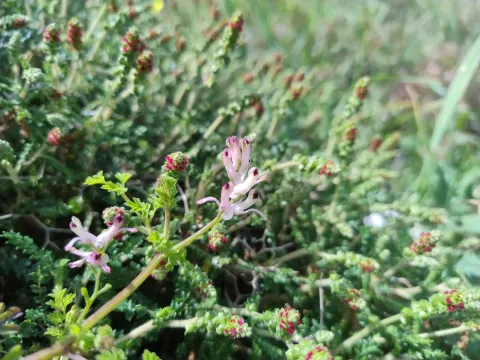
Fumaria judaica
Fumaria judaica
Fumaria judaica is an annual herbaceous plant belonging to the Papaveraceae family, historically valued in traditional medicine for its various therapeutic properties.
What the section contains
Fumaria judaica
Native to the Mediterranean region and the Middle East, this plant thrives in warm climates and is often found in disturbed soils, meadows, and agricultural fields.
Successful cultivation requires well-drained, fertile soil, as the plant is highly sensitive to waterlogging, which can rapidly destroy its root system.
The plant demonstrates a strong preference for sunny locations, which are essential for maximizing the biosynthesis of its active phytochemical compounds.
In terms of agronomy, maintaining an open spacing between plants is recommended to ensure proper airflow, preventing excess humidity build-up near the soil surface.
The primary threats to Fumaria judaica crops are fungal pathogens, including powdery mildew, which thrive in humid and poorly ventilated environments.
Insects such as aphids are frequent pests that can cause significant damage by sucking sap from the tender terminal shoots of the growing plants.
Root rot is a common issue resulting from improper irrigation strategies or poorly draining soil conditions during the vegetative stage of growth.
Integrated pest management strategies, such as crop rotation and the use of botanical insecticides, are highly recommended to maintain plant health and quality.
Farmers should monitor for early signs of leaf spot diseases, ensuring that infected plant material is promptly removed to stop the spread of potential pathogens.