
Fumaria media
Fumaria media
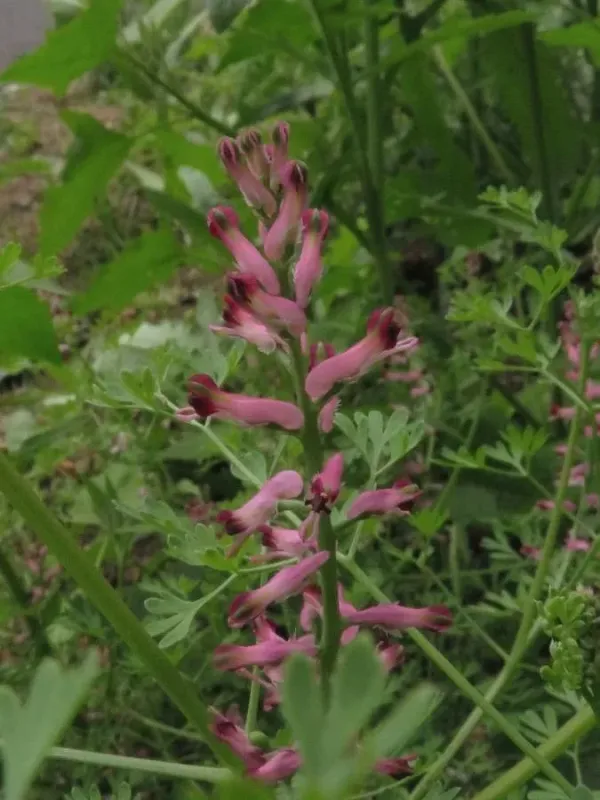
Description
Sowing dates
Fumaria media is an ephemeral plant with a lifecycle closely tied to spring weather conditions. Seeds typically germinate early in the season when soil temperatures reach 5–8 degrees Celsius, making it a prolific early spring weed.
The emergence phase often coincides with the sowing of spring cereals, leading to direct competition for nutrients and light. Its ability to germinate from varying depths allows it to persist across multiple agricultural cycles.
The plant has a rapid growth rate, transitioning from seedling to flowering in just a few weeks. This short duration allows it to quickly establish populations in areas where the soil has been disturbed during planting.
Managing this weed requires precise timing of pre-sowing tillage. Disrupting the soil after the first spring germination wave is critical to reducing the soil seed bank before the main crop is established.
Delayed sowing of crops can sometimes allow for more thorough mechanical weed control, as the majority of Fumaria media germination occurs in the early stages of the agricultural season.
Growing requirements
Fumaria media thrives in open, sunny environments and is particularly fond of fertile, nutrient-rich soils. It serves as an indicator of high nitrogen levels in the soil, often appearing in areas recently amended with manure.
The species prefers well-structured soils and generally avoids highly compacted or acidic substrates. Neutral to slightly alkaline soil pH conditions support the most robust growth of this plant.
Light availability is a major factor in its survival. Because Fumaria media is light-demanding, it significantly underperforms in dense crop canopies, making optimal crop seeding rates a primary defense strategy.
Moderate soil moisture is ideal for its development, especially during the early vegetative stages. While it shows some drought tolerance, prolonged dry periods typically accelerate its flowering and seed-set.
Agro-ecological management involves crop rotation strategies that alternate between high-density crops and row crops, disrupting the stable environment required for Fumaria media to dominate.
Main diseases and pests
Due to the presence of specific alkaloids, Fumaria media exhibits high resistance to most common fungal and bacterial plant diseases. It effectively functions as a robust botanical entity with few natural phytopathogenic threats.
Pests such as certain aphid species may inhabit the plant, potentially serving as a vector for viruses that can migrate to agricultural crops. This makes the weed a significant threat to crop health beyond simple resource competition.
Chemical control remains the most effective tool in commercial agriculture. Herbicides are most efficient when applied to young seedlings in the cotyledon or two-leaf stage, as resistance increases dramatically as the plant matures.
Mechanical control through inter-row cultivation is highly effective in row crops, provided the work is completed before the plant reaches its rapid flowering stage and begins setting viable seeds.
Proper sanitation of harvesting equipment is necessary to prevent the spread of dormant seeds to non-infested fields, as the seeds of Fumaria media can remain viable in the soil for several years.