
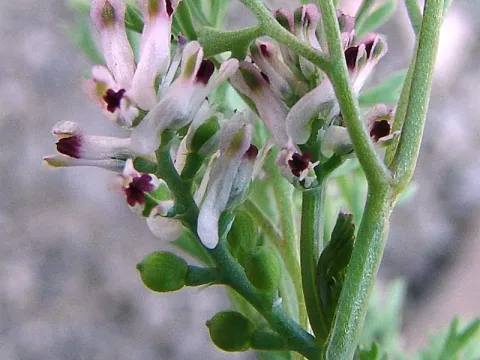
Fumaria asepala
Fumaria asepala
Fumaria asepala is an annual herbaceous plant belonging to the Papaveraceae family. It is typically found in arid and semi-arid regions, displaying significant resilience to environmental stressors.
What the section contains
Fumaria asepala
The plant originates from the Eurasian steppe zones, where it has adapted to survive in areas with fluctuating temperatures and limited water availability during the growing season.
Optimal growth occurs in well-drained, nutrient-rich soils with a neutral pH level. It prefers open areas with maximum exposure to solar radiation throughout the day.
Botanically, it is characterized by finely dissected, glaucous leaves and a stem structure that supports rapid development during the early spring months.
As a light-demanding species, it competes effectively for space and resources in disturbed soils, which is why it often appears in fallow fields and edges of agricultural land.
Common diseases affecting this species include powdery mildew and other fungal pathogens that thrive in high-humidity conditions during the spring transition.
Pests such as aphids are frequently observed on the foliage, drawing sap and causing significant stress to the plant's vascular system, which can inhibit proper maturation.
In agricultural settings, this plant is treated as an unwanted weed, requiring management through herbicide application or precise mechanical cultivation techniques.
Integrated weed management practices, such as crop rotation and inter-row tillage, are essential to prevent the accumulation of the seed bank in the soil.
Monitoring the plant at the seedling stage is critical for effective control, as mature specimens develop deeper root systems that are more difficult to eradicate.