
Yellow raisin bush
Grewia flava
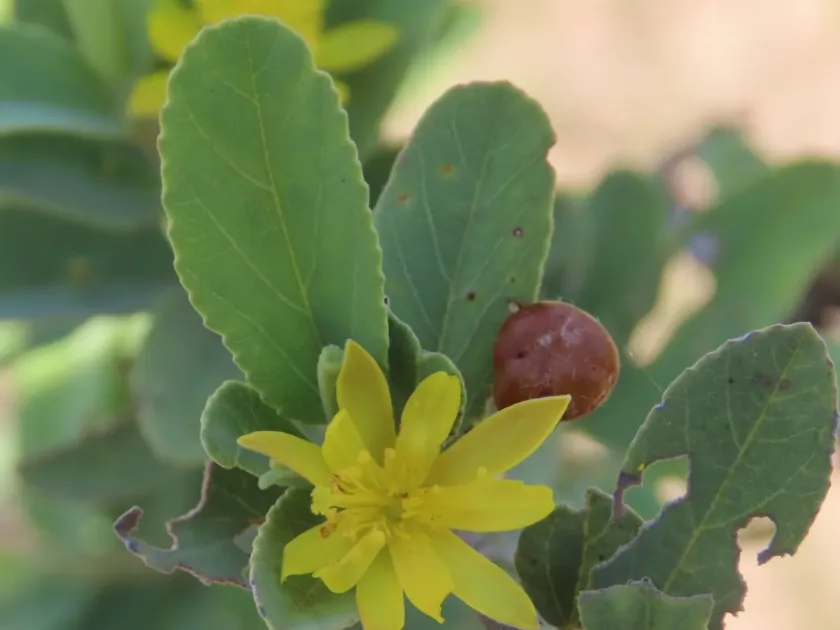
Description
Growing requirements
The yellow raisin bush (Grewia flava) is a perennial shrub belonging to the Malvaceae family. It is native to the arid and semi-arid regions of Southern Africa, where it thrives in harsh environments.
This species requires well-drained soil, typically sand or loam, to establish its deep root system. It exhibits exceptional tolerance to drought, making it an excellent candidate for cultivation in water-scarce areas.
Climate requirements involve high solar exposure and heat tolerance. The plant is well-adapted to the seasonal rainfall patterns of its native habitat, showing significant resilience to extreme fluctuations in weather.
Agrotechnical management includes proper spacing to allow air circulation and minimal pruning to maintain structural integrity. The bush is often used to prevent soil erosion due to its ability to stabilize loose substrates.
Economically, the yellow raisin bush is highly valued for its edible fruits, which contain high levels of vitamins and sugars, and its role as a key source of browse for livestock and wild game animals.
Yield
The fruit production of Grewia flava is highly dependent on environmental conditions, particularly rainfall distribution. Under managed conditions with moderate inputs, the shrub can produce a consistent yield of nutritious berries.
Main diseases and pests
Major threats include infestation by various leaf-eating insects and potential fungal diseases if the plant is grown in areas with high humidity or poor soil drainage. Protection during the early growth stages is crucial.