
Wissadula contracta
Wissadula contracta
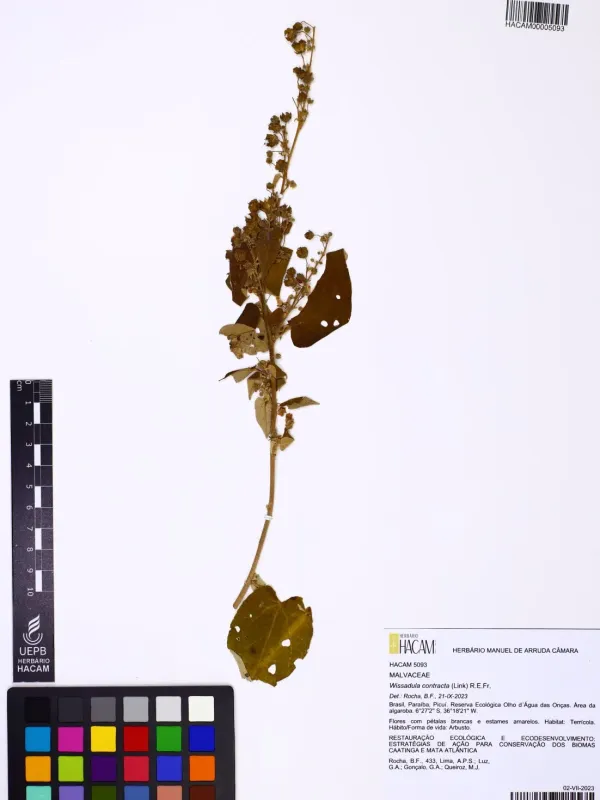
Description
Sowing dates
Wissadula contracta is a tropical plant that requires consistent warmth for germination, with optimal soil temperatures exceeding 18 degrees Celsius during the sowing phase.
Sowing typically takes place at the onset of the rainy season or during the late spring to ensure that the plants benefit from the longest possible growing season.
Precision planting is recommended to maintain uniform spacing, as this ensures optimal competition for light and nutrients among the individual plants.
Seeds are usually sown at a shallow depth of 2 to 3 centimeters, ensuring that the soil is moist but not waterlogged to promote successful emergence.
Effective stand establishment is crucial for the development of high-quality stalks, especially when the crop is grown for industrial fiber extraction purposes.
Growing requirements
As a member of the Malvaceae family, Wissadula contracta shares physiological characteristics with other industrial fiber plants, requiring fertile and well-draining soils.
The plant thrives in regions with high light intensity, as it is a heliotropic species that requires full sun exposure to reach its maximum biomass potential.
Soil structure should be friable and rich in organic matter to support the rapid development of the root system during the plant's vegetative stage.
Climate requirements include a warm, humid environment, as the plant does not tolerate frost or prolonged drought periods during its primary growth cycle.
Agricultural management must prioritize weed control in the early weeks of growth, as the young plants are sensitive to competition from aggressive pioneer species.
Yield
The yield of Wissadula contracta is primarily assessed based on the total biomass production or fiber quality extracted from the stalks.
In optimal conditions with sufficient nutrient availability and water, the crop can produce high yields per hectare, suitable for commercial processing.
Harvest timing is critical; cutting the crop at the early flowering stage typically provides the best balance between fiber quantity and fiber quality.
Modern harvesting techniques involve mechanical cutting, followed by stripping or retting processes to isolate the desired fibrous components of the stem.
Variations in yield are often observed based on the density of the planting, where higher densities often lead to taller and thinner stalks preferred for fiber.
Main diseases and pests
The plant is susceptible to common pests associated with the Malvaceae family, including various species of aphids that feed on the nutrient-rich sap.
Fungal pathogens represent a significant threat in high-humidity climates, particularly those that cause stem rot or foliage blight, reducing overall vigor.
Effective disease management strategy involves strict adherence to crop rotation cycles to prevent the buildup of soil-borne pathogens in the field.
Regular monitoring of the canopy is essential to detect pest outbreaks early, allowing for targeted intervention before major damage occurs to the crop.
Integrated pest management, including the use of beneficial insects and resistant varieties, is considered the gold standard for maintaining healthy plantations.
Harvesting
Harvesting usually occurs when the plants reach their maximum height but before the seeds fully mature to ensure fiber integrity.
Mechanical harvesters are employed to cut the stems near the base, allowing for easy collection and transport to the processing facility.
Post-harvest processing involves bundling the stems for air drying, which is an essential step to prevent molding and degradation of the natural fibers.
Proper storage conditions are vital to maintain the quality of the harvested material, keeping it in dry and ventilated areas until further processing.
Large-scale production often utilizes automated stripping machinery to increase efficiency and lower the costs associated with post-harvest biomass management.