
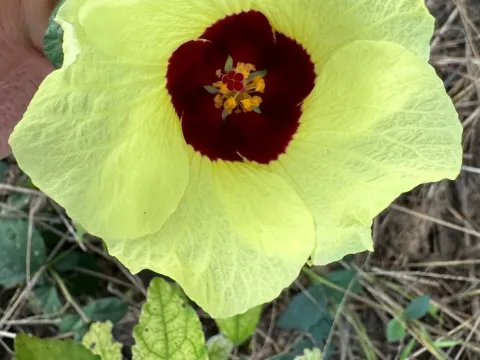
Lemon-leaf hibiscus
Hibiscus calyphyllus
Lemon-leaf hibiscus (Hibiscus calyphyllus) is a perennial woody shrub belonging to the Malvaceae family. It is native to tropical Africa and is valued for its distinct yellow flowers that feature a dark, contrasting eye in the center.
What the section contains
Lemon-leaf hibiscus
The plant thrives in warm, tropical climates and requires well-drained, nutrient-rich soil to support its rapid growth habit. It does not tolerate frost, making it ideal for tropical gardening or as a container specimen in colder temperate zones.
Botanically, it is known for its heart-shaped leaves and long-lasting blossoms that open during the day. In its natural habitat, it can reach heights of several meters, depending on the availability of water and nutritional resources.
From an agricultural and horticultural perspective, this species is used for ornamental purposes and potential fiber production due to the quality of its stem bark. Proper space management is required to ensure adequate airflow between individual plants.
Maintenance involves routine pruning to encourage a bushy growth habit and deadheading to promote continuous blooming throughout the vegetative season. Watering should be deep and thorough, allowing the top layer of soil to dry out slightly between sessions.
The primary pests affecting Hibiscus calyphyllus are spider mites and whiteflies, which tend to proliferate in dry, warm conditions characteristic of greenhouses or dry summer climates.
Mealybugs can also infest the stems and leaf axils, necessitating manual removal or the application of horticultural soaps to prevent secondary fungal infections from the honeydew produced by the insects.
Root rot, caused by excessive moisture and poor soil drainage, is a significant threat to the plant's health. Ensuring the container or garden plot has excellent drainage is a critical preventive measure.
Leaf spot diseases may appear during periods of prolonged high humidity, especially if the canopy is too dense, preventing sunlight from reaching the lower branches of the shrub.
Aphids can cause significant damage to emerging flower buds, leading to deformed flowers or premature bud drop; systematic monitoring and early intervention are essential for optimal flower yield.