
Herrania
Herrania
Herrania is a genus of tropical trees within the Malvaceae family. Closely related to the cacao tree (Theobroma), these plants are native to the rainforests of Central and South America, where they thrive in warm, humid conditions under the forest canopy.
What the section contains


Herrania
To cultivate Herrania successfully, one must maintain high temperatures throughout the year. The species is highly sensitive to cold and requires a frost-free environment to develop its reproductive organs and vegetative mass.
Soil requirements involve well-draining, nutrient-rich substrates. The plant performs best in soils with high organic content, mimicking the leaf litter environment of its natural habitat. Proper drainage is essential to prevent waterlogging.
Consistent moisture is vital for the growth of Herrania. The trees do not tolerate drought and require regular irrigation in areas where rainfall is seasonal, ensuring the soil remains moist but not saturated.
Light management is another crucial aspect. As shade-loving trees, they require protection from direct, scorching sunlight, which can cause leaf burn. Agroforestry systems where they grow under taller canopy trees provide the ideal microclimate.
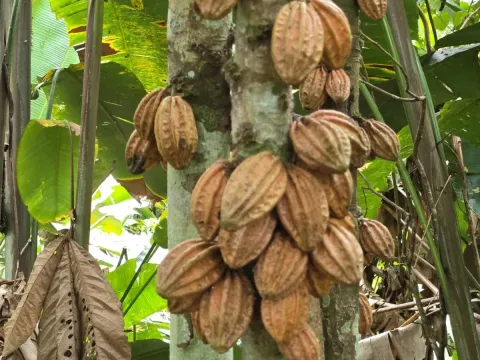
The fruit of Herrania, known for its distinctive ridges and elongated shape, is produced via cauliflory, where flowers and fruits emerge directly from the trunk or older woody branches of the tree.
The pulp of the fruit is edible and prized for its sweet-acidic flavor. It is often consumed fresh or processed into artisanal beverages. While the seeds are structurally similar to cocoa beans, their lower fat content makes them less suitable for mass-market chocolate production.
Currently, Herrania is not grown on a commercial scale like its relative, Theobroma cacao. However, it remains a significant genetic resource for agricultural research, particularly for breeding disease resistance into related crops.
Yields are moderate, with trees typically entering a productive phase a few years after establishment. Pruning and regular fertilization are necessary to maintain vigorous fruit production and structural health.
Harvesting is labor-intensive as it involves manual picking. Workers must be careful not to damage the flower cushions on the trunk, as these structures are the source of subsequent harvests in the following seasons.
The most significant threats to Herrania include fungal pathogens that thrive in humid environments, such as Phytophthora species, which can cause severe rot in fruits and stems.
Insect pests include various species of beetles and scale insects that feed on the bark and leaves. These infestations can weaken the trees and lead to secondary infections by bacteria or fungi.
Disease management relies heavily on preventative measures. Improving air circulation through strategic pruning and maintaining good plantation hygiene is essential to limit the spread of pathogens.
Integrated pest management strategies are often employed to manage local pest populations without resorting to heavy chemical applications, which is vital for preserving the surrounding forest ecosystem.
- Sanitary pruning of infected branches.
- Monitoring for bark-boring insects.
- Maintaining soil fertility to boost tree immunity.