
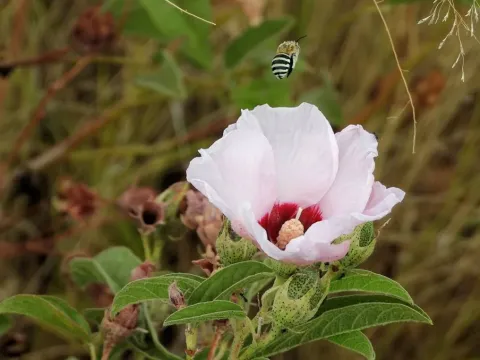
Gossypium costulatum
Gossypium costulatum
Gossypium costulatum is a unique wild species of cotton belonging to the Malvaceae family. It serves as a botanical curiosity and an important genetic resource for researchers studying the evolution of the cotton genus.
What the section contains
Gossypium costulatum
Native exclusively to Western Australia, this plant has evolved to thrive in some of the most arid environments on the planet. Its biological strategy focuses on endurance and efficient water usage rather than rapid biomass accumulation.
The plant requires well-drained, nutrient-poor, and stony soils typical of the Australian outback. Unlike domesticated Gossypium hirsutum, it does not respond well to heavy fertilization or intensive irrigation regimes.
Climatic adaptation is key to this species, as it requires high thermal constants and intense sunlight for its development. It is highly resistant to heat stress, showing remarkable physiological plasticity during dry spells.
From an agricultural standpoint, it is not cultivated for fiber production. Its value lies in the potential transfer of stress-tolerance traits to commercial varieties, which is a major focus for modern agricultural biotechnology.
The primary threats to Gossypium costulatum are linked to habitat fragmentation and environmental degradation in its native range. As a specialized species, it is highly sensitive to changes in local microclimates.
When grown in ex-situ collections, the plant can be susceptible to common malvaceous pests. Mites and sucking insects can impair the plant’s health if the greenhouse environment becomes too humid or stagnant.
Root rot fungi represent a significant risk under conditions of poor soil aeration. Given the species' evolution in dry soils, maintaining a dry root zone is mandatory for its survival in a controlled cultivation environment.
Pathogens affecting wild cotton species are often site-specific. Monitoring for early signs of leaf spot or discoloration is essential to maintain the vigor of individual plants used in scientific research programs.
Maintaining genetic integrity is a major concern, as the species is vulnerable to accidental hybridization with other cotton species. Strict spatial isolation and careful handling are required to prevent contamination of the gene pool.