
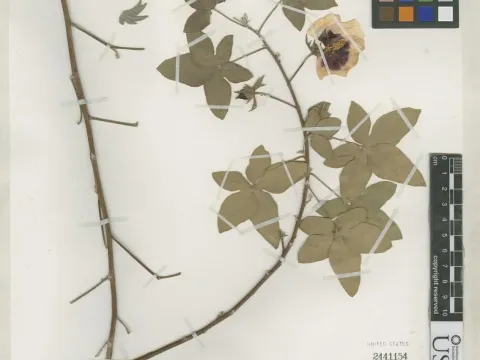
Gossypium barbosanum
Gossypium barbosanum
Gossypium barbosanum is a rare wild species within the Malvaceae family, known for its distinct genetic characteristics. As a member of the Gossypium genus, it is studied primarily for its potential to provide disease resistance traits for modern commercial cotton cultivars.
What the section contains
Gossypium barbosanum
This species is native to specific arid regions in Africa, reflecting its evolutionary adaptation to harsh, high-temperature environments. It requires significant solar radiation to maintain its biological cycle and reach maturity in its natural habitat.
In terms of soil requirements, the plant thrives in well-draining, nutrient-poor soils that do not retain moisture. Waterlogging is the primary threat to the root system, which has evolved to forage deeply in sandy or rocky substrates.
The cultivation of this species is not standard due to its specific photoperiodic requirements and slow growth rate compared to domesticated variants. Agronomic interventions are mostly limited to conservation research and ex-situ germplasm maintenance.
While not a major commercial crop, Gossypium barbosanum serves as a vital component in cotton research programs. Scientists use this species to cross-breed with Gossypium hirsutum, aiming to integrate its inherent resilience to drought and specific tropical pests.