
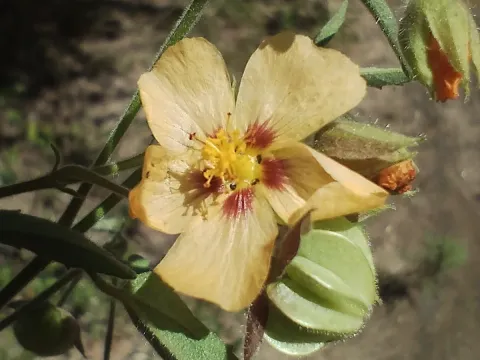
Gaya
Gaya
The Gaya genus, a member of the Malvaceae family, requires careful preparation for sowing. Seeds should be planted in well-drained, prepared soil when the ambient temperature consistently exceeds 20 degrees Celsius to ensure rapid germination.
What the section contains

Gaya
Depth of planting is crucial; sowing seeds at a depth of 1-2 centimeters promotes consistent emergence. The soil should be kept moderately moist during the initial two-week period to prevent the seeds from drying out during the critical stage of radicle development.
Spacing is essential for the healthy development of Gaya plants. Depending on the specific variety, maintaining a distance of 30 to 50 centimeters between rows prevents overcrowding and allows for sufficient airflow, reducing the risk of humidity-related issues.
For large-scale cultivation, modern precision seed drills are recommended to ensure uniform spacing and depth. This standardization simplifies subsequent agricultural activities such as weeding, fertilization, and the mechanical harvesting of the crop.
Weed management should begin immediately after sowing. Since the seedlings grow slowly in the first few weeks, they are vulnerable to competitive pressures from fast-growing weeds that can overshadow the crop and deplete soil nutrients.
Gaya thrives in locations with abundant sunlight and high thermal units. It is sensitive to shade, and any obstruction to natural light will significantly impact its growth rate and the accumulation of biomass during the season.
The soil should be fertile and light, preferably sandy loam or loam with high organic matter content. Good drainage is non-negotiable, as waterlogging in the root zone quickly leads to root decay and susceptibility to opportunistic fungal pathogens.
Water requirements are moderate, but the moisture level should be consistent throughout the plant's life cycle. During the flowering stage, the crop is particularly sensitive to drought stress, which can lead to reduced fruit or seed set.
The ideal climatic conditions mimic a tropical or subtropical environment with stable, warm temperatures. Protecting the plants from strong, cold winds is necessary, as mechanical damage to leaves and stems can provide entry points for pathogens.
Fertilization regimes should be based on regular soil testing. Nitrogen promotes vegetative growth, while potassium and phosphorus are essential for building plant strength and supporting the maturation of the plant's reproductive structures.
Pathogenic fungi represent the most significant threat to Gaya, particularly in humid or stagnant air conditions. Powdery mildew can rapidly colonize leaves, significantly reducing the plant's photosynthetic capacity and overall health.
Insects like spider mites and whiteflies are common pests that thrive in dry environments. They cause damage by piercing leaf tissues and extracting plant fluids, which often results in chlorosis and the stunting of affected branches.
Integrated Pest Management (IPM) is the best strategy for maintaining healthy Gaya crops. This involves a combination of regular field monitoring, crop rotation, and the strategic use of biological control agents to keep pest populations below economic thresholds.
Root rot is a major risk if the soil structure is poor or drainage is inadequate. Managing water applications through drip irrigation is an effective way to maintain moisture while preventing the soil surface from remaining excessively wet.
Sanitation practices, including the removal and destruction of crop debris after harvest, are vital to break the life cycles of recurring pests and diseases. Clean fields are the first line of defense in sustainable agricultural production.