
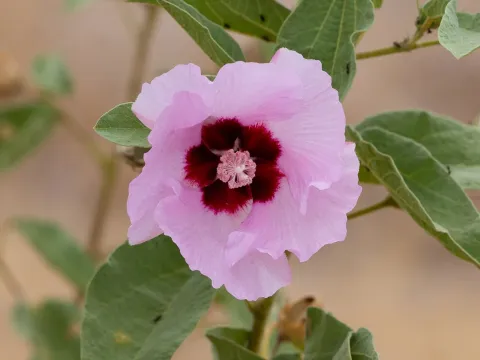
Gossypium australe
Gossypium australe
Gossypium australe, commonly known as the desert cotton, is a fascinating member of the Malvaceae family. It is a hardy shrub native to the arid interior of Australia, known for its ability to thrive in challenging, dry environments.
What the section contains
Gossypium australe
Sowing should be performed when the soil temperature consistently reaches optimal warmth, usually after the last frost of the season. The seeds require well-draining soil to prevent rot and encourage strong root development.
The spacing between plants must be carefully calculated to allow for the natural shrubby architecture of the species. Allowing enough room for airflow helps reduce humidity around the foliage.
Seed depth should be moderated based on the soil texture and moisture content at the time of planting. For lighter, sandier soils, a slightly deeper planting is recommended to keep the seed in contact with moisture.
Preparation of the seedbed involves clearing all debris and ensuring the soil is fine-textured. This facilitates easier emergence and uniform seedling growth across the entire field.
As a desert-adapted species, it thrives in high temperatures and full sunlight. It requires consistent exposure to solar radiation to complete its reproductive cycle effectively and produce mature fruit.
While highly drought-tolerant, the plant benefits from strategic irrigation during the flowering stage. This practice helps ensure the production of larger, higher-quality fibers and more robust seeds.
The soil should have a neutral to slightly alkaline pH level. Soils that are high in organic matter and well-aerated provide the best environment for root penetration and nutrient uptake.
Proper nutrient management is essential for long-term health. Potassium and phosphorus are particularly important during the pod-setting phase to ensure full maturity and resilience.
Environmental stability is important. Although it can handle harsh conditions, protecting the crop from extreme weather events, such as heavy torrential rains, can significantly improve the final yield.
Pests such as aphids and various caterpillars represent a significant threat to Gossypium australe. Regular scouting is the best way to detect early signs of infestation and act quickly.
Fungal diseases are the most common cause of yield loss, especially if the planting density is too high. Improving ventilation and maintaining clean rows are essential preventative steps.
Biological control agents, such as predatory insects, can be very effective in managing pest populations without the need for harsh chemical intervention, preserving the local ecosystem.
In cases of severe outbreaks, targeted applications of organic-friendly pesticides may be necessary to protect the plant's structural integrity and overall vigor during the growing season.
Weed management is vital not only for reducing nutrient competition but also because many common weeds serve as hosts for cotton-specific insects and viruses that can harm the plant.