
Taxillus cuneatus
Taxillus cuneatus
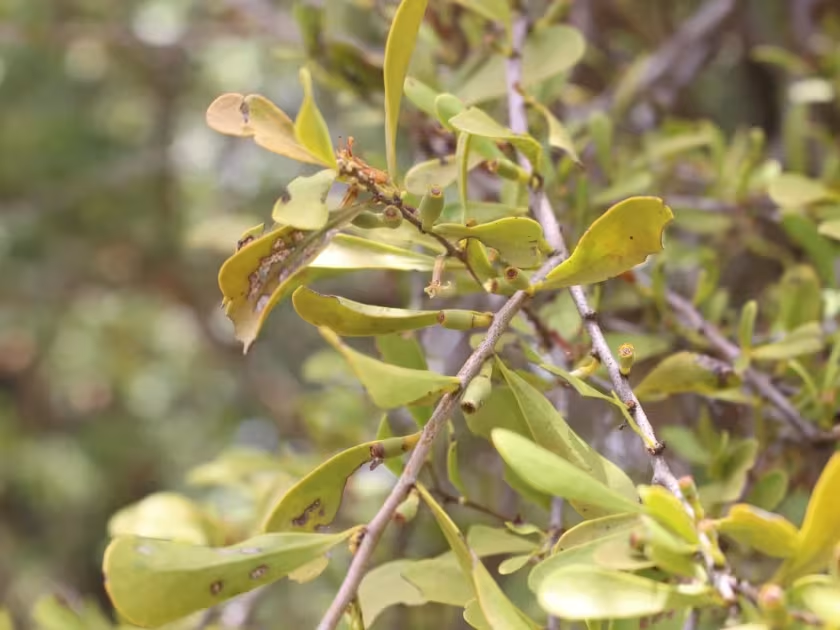
Description
Growing requirements
Taxillus cuneatus is a species of hemiparasitic plant belonging to the Loranthaceae family. Unlike conventional crops, it is a botanical parasite that attaches itself to the branches of host trees to access vascular tissues.
The plant utilizes specialized structures called haustoria to penetrate the xylem of the host. Through these connections, it extracts essential water and minerals, which significantly burdens the physiological processes of the colonized host tree.
This species is primarily native to the tropical and subtropical regions of India and Sri Lanka. It thrives in humid environments and exhibits a high degree of host specificity, frequently colonizing fruit-bearing trees in plantations.
From a botanical standpoint, Taxillus cuneatus displays distinctive wedge-shaped leaves and tubular flowers. Its reproductive strategy involves seed dispersal by birds, which allows the plant to spread across large orchards efficiently.
In agricultural management, this plant is considered a significant threat to productivity. Effective management requires the early detection and pruning of infested branches to prevent the plant from weakening or killing economically valuable trees.