
Taxillus kaempferi
Taxillus kaempferi
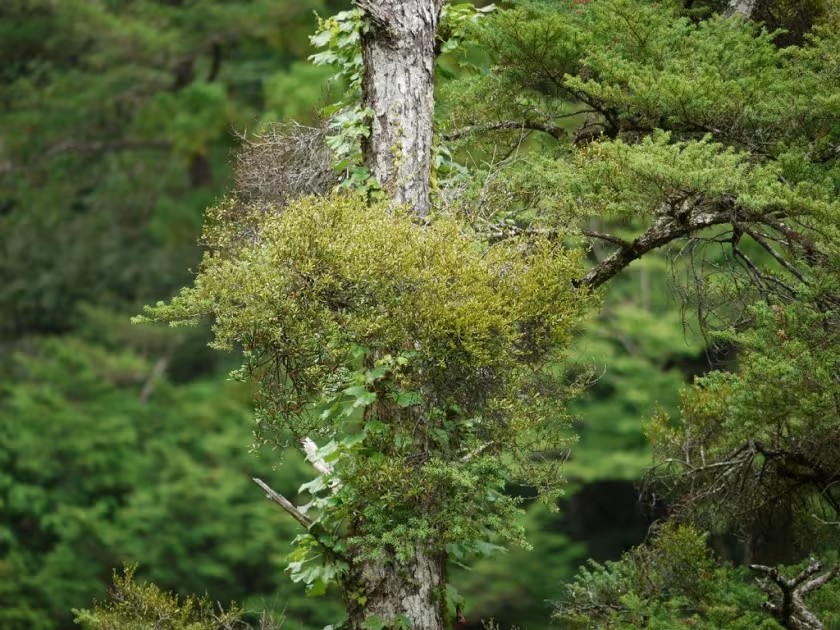
Description
Growing requirements
Taxillus kaempferi is a woody hemiparasitic shrub belonging to the Loranthaceae family. This plant exhibits a specialized lifestyle, attaching itself to the branches of host trees using haustoria to extract water and mineral nutrients from the xylem of the host.
The species is native to East Asia, including Japan, Korea, and China. It is commonly found inhabiting various deciduous trees, particularly species within the Rosaceae family, such as apples, pears, and cherries, which are abundant in its natural range.
Botanically, it is characterized by leathery evergreen leaves arranged oppositely and distinctive tubular flowers. Although it acts as a parasite, it contains chlorophyll and performs photosynthesis, making it a hemiparasite rather than a holoparasite.
The environmental requirements for Taxillus kaempferi include a humid, temperate climate. It thrives in environments where host trees provide sufficient light exposure, as the plant relies on photosynthetic activity to supplement the nutrients absorbed from its host.
Economically, Taxillus kaempferi is valued for its traditional medicinal properties. It is widely used in Asian phytotherapy to create supplements aimed at strengthening bones and muscles, treating rheumatic conditions, and improving overall cardiovascular health.
Main diseases and pests
The primary threat to Taxillus kaempferi is the loss of host trees due to deforestation and land development. Since the plant cannot survive independently, the health of the ecosystem directly depends on the conservation of mature tree populations.
Fungal infections affecting host trees present a significant risk. If the tree-host's vascular system is compromised, the parasitic connection is severed, leading to the rapid decline and eventual death of the Taxillus colony.
Insects and various pests that attack the host tree indirectly harm the Taxillus by reducing the availability of host sap, which the hemiparasite requires for sustenance during dry or stress-prone periods.
Environmental pollution and the decline in pollinator populations also pose a threat. The plant requires successful pollination to produce seeds, which are then dispersed by birds to new host trees.
Climate instability, particularly changing rainfall patterns, affects the host trees' ability to store moisture, which creates a challenging environment for the parasitic plant to maintain its physiological functions.