
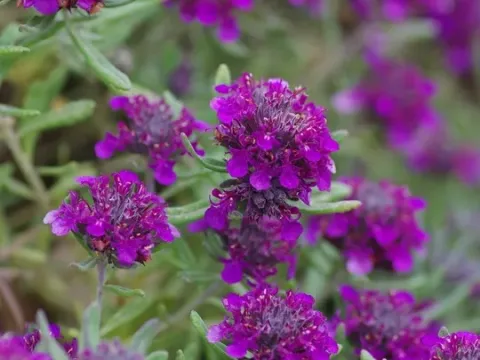
Ackermann germander
Teucrium ackermannii
Ackermann germander (Teucrium ackermannii) is a perennial herbaceous plant belonging to the Lamiaceae family. It is recognized for its unique appearance, characterized by intricate foliage and a sturdy structure that allows it to thrive in diverse environmental conditions.
What the section contains
Ackermann germander
The plant demonstrates excellent drought tolerance, making it an ideal choice for xeriscaping and sustainable agricultural projects. It requires full sunlight exposure to maintain its compact growth habit and to promote the development of its distinctive floral spikes.
Regarding soil requirements, this species favors well-draining, stony, or calcareous soils. The soil texture should be light to prevent water accumulation near the root system, which is crucial for preventing physiological disorders and fungal infections in Teucrium species.
Optimal climatic conditions for this crop are characterized by long, sunny summers and mild, dry winters. In colder regions, growers should ensure that the planting site has excellent drainage and is sheltered from harsh, cold winds that could cause tissue damage.
The primary agricultural and economic use of the plant includes its application as an ornamental ground cover in rock gardens and its value as a source of phytochemicals for pharmaceutical research and essential oil production.
The most significant threats to the crop include various forms of root rot and stem decay, which are almost exclusively caused by excessive soil moisture or poor drainage during wet seasons. Improving air circulation around the plants is essential for prevention.
Pest pressures are generally low, although outbreaks of aphids or spider mites may occur during periods of prolonged heat stress. Integrated pest management, focusing on early detection and biological control methods, is recommended to minimize chemical input.