
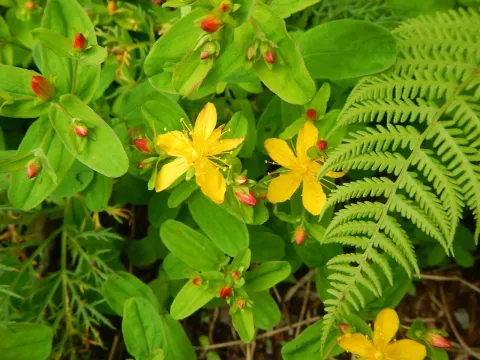
Hypericum senanense
Hypericum senanense
Hypericum senanense is a perennial plant that requires specific preparation for successful germination and establishment in the field or nursery.
What the section contains
Hypericum senanense
For optimal results, sowing is recommended in the autumn, allowing the seeds to undergo natural winter stratification, which enhances emergence rates.
If spring sowing is preferred, seeds must be artificially stratified in a refrigerated environment at low temperatures for several weeks before planting.
The seeds are relatively small and should be sown at a shallow depth, ensuring they are pressed firmly into the soil without being buried deeply.
Maintaining a distance of at least 45 centimeters between rows allows for efficient weeding and provides adequate airflow for the maturing plants.
The plant thrives in full sun exposure, as sufficient light intensity is essential for the biosynthesis of secondary metabolites in the foliage.
Well-drained soils, particularly sandy loams, are ideal for cultivation to prevent waterlogging, which often induces root rot in these perennial crops.
The species demonstrates moderate drought tolerance once established but benefits significantly from regular irrigation during the peak growing season.
Soil pH should ideally be neutral or slightly acidic; testing the soil before planting ensures proper nutrient uptake for healthy plant development.
Regular cultivation of the soil surface between rows helps to control weed competition and improves the oxygen exchange in the root zone.
The yield potential of Hypericum senanense typically matures by the second year of cultivation, producing a steady annual biomass for harvest.
Proper plant density management significantly impacts the total dry weight yield per hectare during each harvest season within the production cycle.
Applying balanced fertilizer levels during the early vegetative stages encourages robust growth and increases the quantity of harvestable plant material.
High yields are contingent upon consistent moisture availability, especially during the transition from the vegetative phase to the flowering stage.
Continuous monitoring of the crop helps to identify peak biomass accumulation, allowing for optimal timing of the harvest to maximize output.
Fungal diseases, specifically leaf spot and powdery mildew, are the primary biological threats to this crop, especially in humid and stagnant climates.
Aphids and mites can pose significant risks by colonizing the tender parts of the stems, thereby reducing the commercial quality of the plant material.
Integrated pest management strategies are advised, emphasizing the use of beneficial insects and resistant varieties over intensive chemical applications.
Good agricultural practices, such as maintaining proper plant spacing and effective sanitation, are fundamental for preventing disease outbreaks.
Excessive moisture retention within the canopy should be avoided through strategic management of the planting density and regular trimming.
Harvesting is performed during the peak flowering phase, ensuring that the highest concentration of phytochemicals is retained in the harvested stems.
Cutting should be done during dry weather to prevent moisture-related quality degradation, which can lead to rapid microbial spoilage post-harvest.
Immediate post-harvest processing involves moving the biomass to a clean, shaded area to begin the drying process as quickly as possible.
Temperature control during the drying phase is critical; keeping the ambient temperature below 40 degrees Celsius prevents the degradation of volatile compounds.
Properly dried material is stored in a cool, dark, and dry environment to ensure long-term shelf life and maintenance of its medicinal properties.