
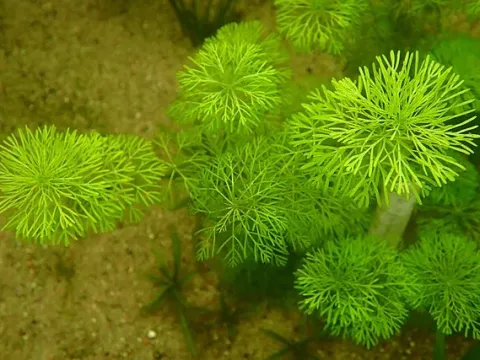
Myriophyllum simulans
Myriophyllum simulans
Myriophyllum simulans is a perennial aquatic plant belonging to the Haloragaceae family. It is recognized for its fine, feather-like foliage and its ability to thrive in submerged conditions within freshwater environments such as lakes and slow-moving streams.
What the section contains
Myriophyllum simulans
The plant requires a nutrient-rich substrate for anchoring and healthy growth. It is highly efficient at nutrient uptake, effectively extracting nitrogen and phosphorus from the water column, which contributes significantly to water quality improvement in artificial ponds.
Optimal development depends heavily on high light availability. Myriophyllum simulans exhibits a robust growth rate when exposed to strong light, which encourages the development of dense, vertical stems that provide essential cover for aquatic fauna.
Temperature preferences for this species range from temperate to tropical conditions. Maintaining water temperatures between 20°C and 28°C ensures that the metabolic processes of the plant operate at peak efficiency, promoting continuous biomass production.
Water quality parameters, specifically pH levels and dissolved inorganic carbon content, must be monitored. The species performs best in neutral to slightly alkaline water, which facilitates the gas exchange necessary for photosynthesis in an aquatic medium.
Harvesting Myriophyllum simulans is typically performed for aquarium trade or for thinning overgrown aquatic areas to maintain a healthy ecosystem balance. Mechanical thinning prevents the matting of surface growth, which can otherwise block light penetration.
The harvesting process involves pruning stems above the base to allow for rapid vegetative regeneration. Since the species propagates readily from stem cuttings, this practice ensures a sustainable supply of plant material for ongoing cultivation.
Post-harvest, the collected plant material serves as a valuable organic amendment. Due to its nitrogen-rich content, it is frequently composted and used as a bio-fertilizer for terrestrial gardens, improving soil texture and nutrient status.
Regular maintenance cycles are essential to manage the density of the growth. By removing excessive biomass, the manager ensures that the remaining plants have sufficient space to grow and that the water circulation remains unobstructed.
Biosecurity measures should be taken during disposal of harvested material to ensure that fragments do not introduce the plant into local natural water bodies where it may become invasive if non-native to the specific region.