
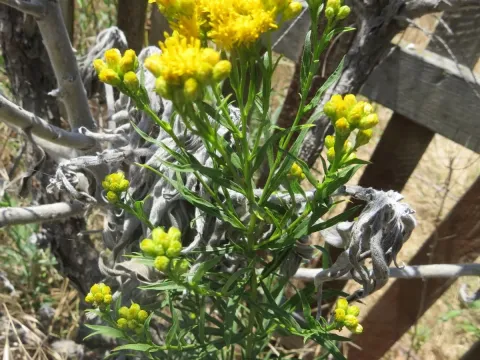
Western goldenrod
Solidago occidentalis
Western goldenrod, known scientifically as Euthamia occidentalis, is a perennial flowering plant belonging to the Asteraceae family. It is distinct from the typical Solidago species due to its specific botanical traits and habitat requirements.
What the section contains
Western goldenrod
Native to western North America, this species thrives in riparian zones and wet meadows, showing a strong preference for alluvial soils that retain consistent moisture levels.
The cultivation of this plant requires full sun exposure to ensure robust development of its dense inflorescences, which serve as an important resource for local pollinators.
Soil quality is paramount, with the plant favoring rich, loamy substrates that possess good drainage while maintaining hydration during the peak of the growing season.
Agricultural management requires spacing the plants to allow for lateral rhizome growth, as the species tends to form expansive colonies over several seasons.
The primary threats to Western goldenrod include fungal pathogens such as powdery mildew, which flourish when humidity is high and airflow is restricted.
Insects like aphids and spider mites can cause significant damage to the foliage, especially during periods of drought or nutrient stress, leading to stunted growth.
Rust diseases are also common in environments with prolonged leaf wetness, necessitating strict monitoring of the plant health throughout the summer months.
Effective control strategies involve integrated pest management techniques, prioritizing crop hygiene and the removal of infected plant debris to prevent recurring cycles.
Maintaining optimal soil fertility and avoiding excessive nitrogen fertilization helps improve the plant's natural resilience against common garden and field pests.