
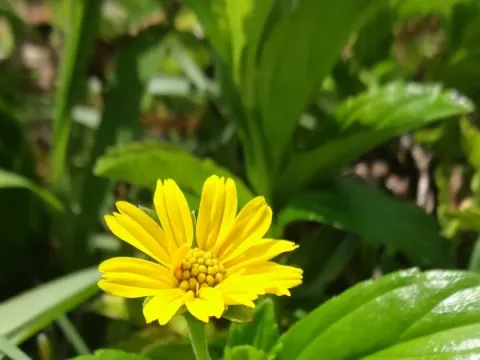
Wedelia paludosa
Wedelia paludosa
Wedelia paludosa is a perennial herbaceous plant belonging to the Asteraceae family. Originating from the tropical wetlands of South America, this species is well-regarded for its adaptability and vigorous growth habit, making it a popular choice for ecological restoration and landscaping.
What the section contains
Wedelia paludosa
The plant exhibits trailing stems that root at the nodes, creating a dense, mat-like ground cover. Its foliage consists of opposite, serrated leaves, accompanied by bright yellow, daisy-like flowers that bloom consistently under favorable conditions throughout the year.
For successful cultivation, Wedelia paludosa requires a warm climate with temperatures ideally ranging between 20°C and 30°C. It is strictly a non-hardy plant that cannot tolerate frost, necessitating its production in greenhouses or frost-free tropical/subtropical environments.
The soil requirements focus on high moisture retention and nutrient availability. While the plant can grow in various soil types, it performs best in loamy, well-draining soils with a neutral pH. Consistent irrigation is essential to prevent wilting during dry intervals.
Agrotechnical management primarily involves controlled irrigation and balanced fertilization to promote leaf density. Due to its rapid spread, occasional pruning may be necessary to contain the plant within the designated garden or landscape borders.
Common diseases affecting this crop include fungal infections such as powdery mildew and root rot, often triggered by poor air circulation or over-saturation of the soil. Improving drainage and ensuring adequate spacing between individual plants are crucial prevention methods.
Pest issues often include infestations of aphids, spider mites, and whiteflies, especially when the plant is stressed by environmental fluctuations. Integrated pest management, including the use of horticultural oils or biological controls, is recommended to maintain plant health.