
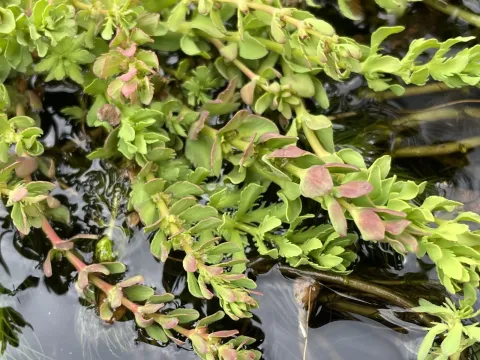
Myriophyllum quitense
Myriophyllum quitense
Myriophyllum quitense is a perennial aquatic plant belonging to the Haloragaceae family. It is characterized by its elongated, flexible stems and finely divided, feathery leaves that grow in whorls, providing significant underwater biomass.
What the section contains
Myriophyllum quitense
Native to the Andean regions of South America, this plant is well-adapted to freshwater environments. It thrives in both slow-moving streams and stationary water bodies, acting as an essential component of local aquatic ecosystems.
The plant requires moderate to high levels of lighting to maintain its vibrant color and robust growth rate. It is highly efficient at absorbing nutrients directly from the water column, making it a valuable addition to closed aquatic systems.
Optimal growth conditions involve a temperature range between 18 and 24 degrees Celsius. The substrate should be nutrient-rich and porous, allowing the delicate root system to establish itself firmly without experiencing oxygen deprivation.
Commercially, Myriophyllum quitense is valued in the aquarium hobby for its aesthetic properties and in waste-water management for its ability to filter excessive nutrients. It serves as a natural oxygenator in managed water environments.
Algal blooms pose a significant threat to the plant's health, as they compete for sunlight and nutrients. If left unchecked, algae can cover the feathery leaves, causing the stems to weaken and eventually decay.
Bacterial pathogens often target the plant when it is stressed by poor water quality or fluctuating chemical parameters. This usually manifests as tissue softening or dark discoloration along the main stem.
Certain aquatic snails are known to graze on the succulent foliage of the plant, which can hinder its ability to spread. Keeping snail populations under control is essential for maintaining a healthy and dense plant stand.
Sediment accumulation around the lower nodes can interfere with nutrient absorption and oxygen exchange. Periodic cleaning of the substrate and proper water circulation are vital for plant longevity.
To prevent disease outbreaks, it is necessary to ensure consistent water conditions and prevent the build-up of organic waste. Healthy plants are generally resilient, but stress factors must be mitigated through proactive maintenance.