
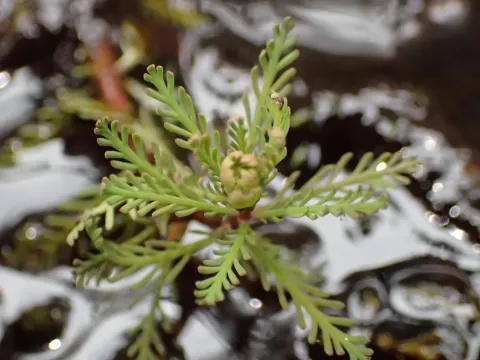
Robust watermilfoil
Myriophyllum robustum
Robust watermilfoil (Myriophyllum robustum) is a member of the Haloragaceae family, primarily recognized as a specialized aquatic macrophyte. It typically thrives in shallow, slow-moving or stagnant freshwater habitats, acting as a crucial component of local ecosystems.
What the section contains
Robust watermilfoil
Native to New Zealand, this plant displays specific adaptations to submerged life. It is characterized by its whorled, finely dissected leaves and a robust rhizomatous root system that anchors the plant firmly in soft, nutrient-rich substrates.
Regarding its habitat, this species requires consistent water levels to maintain physiological stability. It performs best in environments with clear, stable water that allows sufficient light penetration to reach its lower leaf structures for efficient photosynthesis.
Agricultural and horticultural practices for this species focus on water chemistry management. The soil substrate should be rich in organic matter but balanced to prevent excessive gas accumulation, which can hinder root development and overall plant health.
Temperature management is another critical aspect, as the plant prefers stable, moderate conditions rather than extreme temperature fluctuations. Adequate spatial distribution during planting is essential to ensure that every individual gets sufficient access to light and dissolved nutrients.
The primary threats to Myriophyllum robustum include competition from invasive aquatic weeds that can quickly dominate the space and deplete available nutrient supplies.
Pests such as specialized water insects and certain species of snails may graze on the delicate foliage, causing significant tissue damage if their populations are not managed properly.
Pathogenic threats are often linked to water quality issues; for example, stagnant water with high biological oxygen demand frequently leads to stem rot and fungal infections in the root zone.
Disease management requires maintaining a healthy ecological balance, which includes proper circulation of water to prevent the accumulation of decay-causing debris around the plant bases.
Chemical contamination is a significant external threat, as the plant is highly sensitive to herbicides and heavy metals, which can be fatal to the delicate tissues of this aquatic species.