
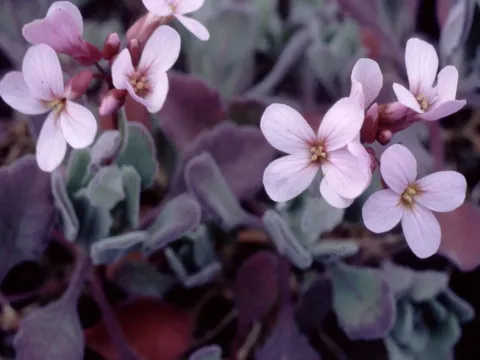
Wall rockcress
Arabis muralis
Wall rockcress (Arabis muralis) is a herbaceous perennial plant belonging to the Brassicaceae family. It is typically found in rocky habitats and natural crevices, adapting well to limited soil volumes.
What the section contains
Wall rockcress
The plant thrives in sunny locations with excellent drainage. It is highly sensitive to waterlogging, which can cause root rot, making sandy or gravelly soil substrates essential for its survival.
As a calcicole species, it prefers alkaline or neutral soil conditions. It does not require high levels of soil fertility, making it suitable for poor, rocky, or thin soils where other species may struggle.
Climate adaptability is one of its primary strengths, as it demonstrates significant cold tolerance. It is well-suited for temperate climates and can withstand the harsh conditions of mountainous or rocky landscapes.
In landscaping and horticulture, this species is primarily valued for its utility in rock gardens and wall plantings. It creates a dense carpet that effectively suppresses weeds and adds aesthetic value to vertical surfaces.
Crucifer flea beetles are the most significant pests for this crop, as they often feed on the foliage, leaving behind small holes that detract from the plant's appearance.
Fungal diseases, particularly powdery mildew, represent a serious threat when the plant is grown in areas with high humidity or poor air circulation.
Root and crown rot are common physiological issues resulting from excessive irrigation or poor drainage, especially during the dormant season.
Integrated pest management, including monitoring and localized treatment, is necessary to maintain healthy growth cycles throughout the year.
To ensure plant health, gardeners should focus on maintaining adequate light levels and proper ventilation, which significantly reduces the incidence of fungal pathogens.