
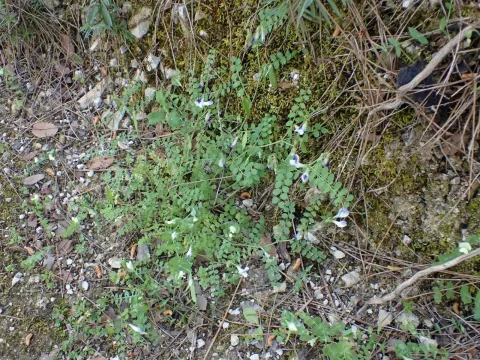
Cyprus vetch
Vicia cypria
Cyprus vetch (Vicia cypria) is an annual herbaceous plant belonging to the Fabaceae family. It is recognized for its ability to thrive in Mediterranean-type climates, serving as a biological resource that combines soil-improving properties with nutritional value for agricultural use.
What the section contains
Cyprus vetch
The plant originates from the Eastern Mediterranean, specifically the island of Cyprus. This geographical origin dictates its evolutionary adaptation to rocky, calcareous, and semi-arid landscapes, distinguishing it from many other vetch varieties that prefer more temperate or humid environments.
Botanically, it features a sprawling growth habit with pinnate leaves that terminate in tendrils. These tendrils allow the plant to climb and stabilize itself, optimizing its surface area for exposure to sunlight. The root system is capable of forming nodules with symbiotic bacteria, facilitating atmospheric nitrogen fixation.
Regarding cultivation, Vicia cypria performs best in well-drained, porous soils. It is notably resilient to high heat and water stress, which allows it to remain productive during periods when other legumes might experience senescence. Proper site selection is essential to avoid waterlogged conditions.
The primary agricultural application for Cyprus vetch is forage production. Whether harvested for hay or grazed in situ, it provides a high-protein feed source. Furthermore, its potential as a cover crop is significant, as it aids in erosion control and improves overall soil fertility through organic matter contribution.