
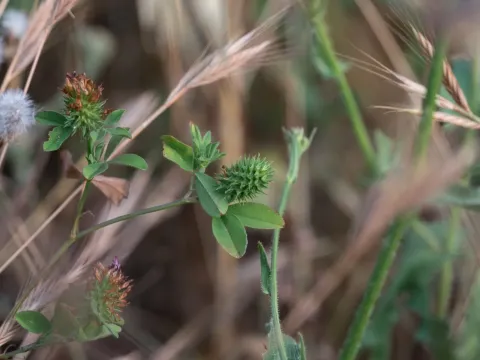
Prickly clover
Trifolium echinatum
Prickly clover is an annual legume that is typically sown in early spring when soil temperatures reach 5-8 degrees Celsius. This ensures optimal germination rates for the crop.
What the section contains
Prickly clover
Sowing should be timed to avoid the risk of late spring frosts. Adequate moisture is essential during the initial stages of plant establishment to promote deep root development.
The recommended seeding rate is 10-15 kilograms per hectare using a standard row drill method. Seeds should be planted at a shallow depth of approximately 1-2 centimeters.
Post-sowing rolling is highly recommended to improve seed-to-soil contact. This practice is crucial in drier climates to ensure uniform emergence across the field.
When grown in mixtures with grasses, the seeding density of clover should be carefully managed to ensure it remains a significant component of the forage mix.
This crop thrives in fertile, loamy, or sandy-loam soils with a neutral pH level. It shows moderate drought tolerance but requires consistent rainfall during active growth stages.
Prickly clover is a light-demanding plant and does not perform well under shade or in heavily weeded areas. Proper field selection is essential for achieving high biomass yields.
The optimal temperature for growth ranges between 18 and 24 degrees Celsius. The crop is sensitive to cold stress during its early vegetative stages but recovers well under ideal conditions.
Well-drained soil is necessary, as waterlogging can lead to root diseases. The crop does not tolerate high soil salinity, which can severely hinder its development.
Phosphorus and potassium fertilizers are recommended to boost crop productivity. As a legume, it benefits from nitrogen-fixing bacteria, reducing the need for synthetic nitrogen.
Yield potential of Prickly clover is significant when grown under proper management. With adequate water, it can produce two full harvests within a single season.
Dry matter yields typically range from 3 to 5 tons per hectare. Results can fluctuate depending on the management intensity, including irrigation and fertilization schedules.
Foraging value is highest when harvested early in the flowering phase. Delaying the harvest results in coarser stems and lower digestibility for livestock.
The plant demonstrates excellent regrowth capabilities after cutting, which contributes to its high annual yield performance. It is a reliable option for farmers seeking productive legumes.
Implementing intensive management practices, such as supplemental irrigation, can increase total biomass production by nearly 40 percent in dry regions.
Fungal diseases such as anthracnose and powdery mildew are common threats, particularly in humid environments where air circulation is restricted by dense canopy growth.
Pests like weevils can damage foliage and reproductive structures. Consistent scouting and integrated pest management strategies are necessary to protect the yield.
Root rot remains a concern, often linked to improper crop rotation. A rotation cycle of at least 3-4 years is advised to prevent the buildup of soil-borne pathogens.
Weed competition is most detrimental during the seedling stage. Effective pre-plant tillage and clean field preparation are critical to allow the crop to establish itself.
Using disease-resistant varieties and maintaining optimal soil health are the best defenses against biological threats in Prickly clover fields.
Hay harvesting is most effective when performed at full bloom. This stage offers the best compromise between total biomass weight and nutrient concentration.
For silage production, harvesting at an earlier stage is preferred. This results in better fermentation and preserves higher protein levels in the final product.
A cutting height of 5-7 centimeters above the soil surface is required. This leaves sufficient vegetative parts for rapid regrowth of the next crop cycle.
Efficient drying processes after cutting are essential to prevent leaf loss. Leaves are the most protein-dense part of the plant and should be preserved carefully.
When harvesting for seed, wait until the flower heads turn brown and seeds harden. This ensures high viability and quality for subsequent planting seasons.