
Prioria buchholzii
Prioria buchholzii
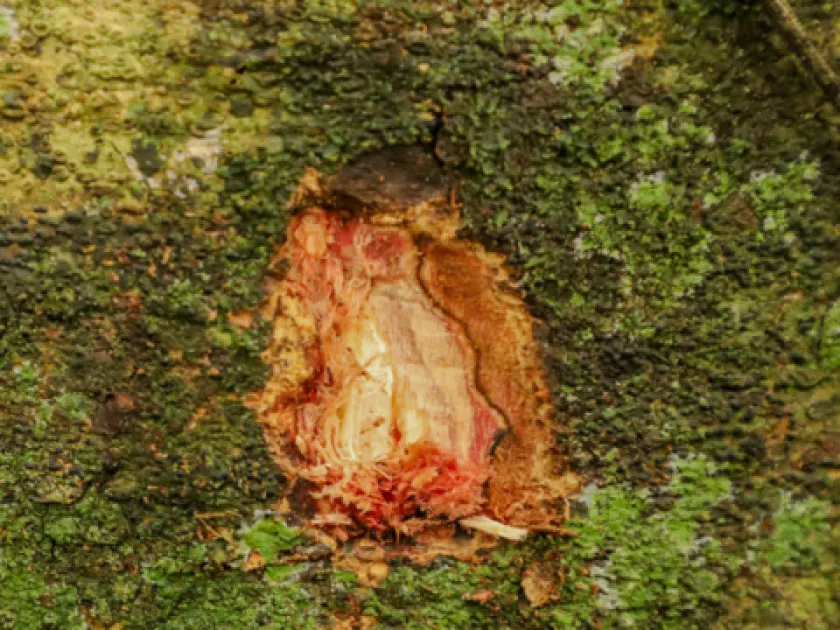
Description
Growing requirements
Prioria buchholzii is a significant tropical tree species belonging to the Fabaceae (legume) family, native to the lush tropical rainforests of Western Africa.
The species is primarily found in lowland tropical forests and riparian zones, thriving in environments characterized by high humidity and significant annual rainfall.
It requires deep, nutrient-rich soils that offer good drainage, although the tree is evolutionarily adapted to cope with seasonal flooding in riverine habitats.
Botanically, it is a tall, canopy-forming tree that displays slow growth rates, reflecting its adaptation to a stable and competitive forest ecosystem.
Agronomic management requires maintaining specific microclimatic conditions, as the saplings are particularly sensitive to direct sunlight and moisture deficit during their early developmental stages.
Yield
The primary economic value of Prioria buchholzii lies in its high-quality timber, which is highly sought after for furniture manufacturing and high-end construction.
Its wood is characterized by excellent durability, density, and resistance to environmental decay, making it a valuable resource for long-term applications.
In forestry management, yield is measured over long time cycles, as the timber quality depends on the maturation of the wood over several decades.
The species also contributes significantly to the ecological value of forests by providing habitat and structural support to various species within its native range.
Global demand for sustainable timber has highlighted the need for careful inventory and growth monitoring to ensure harvesting remains within ecological limits.
Main diseases and pests
The main threats to Prioria buchholzii involve large-scale deforestation and the conversion of tropical forest land into agricultural sites for cash crops.
Pest pressures include various wood-boring insects that target mature trees, which can significantly damage the structural integrity of the timber.
Fungal pathogens associated with high-moisture tropical environments represent a risk for tree health, particularly when the root system is compromised by local soil conditions.
Shifting weather patterns and increasing temperatures pose a threat to the natural regeneration of the species, potentially restricting its future range.
Conservation efforts are currently focused on reforestation projects and improving the survival rates of young trees in restored forest landscapes through better soil management.