
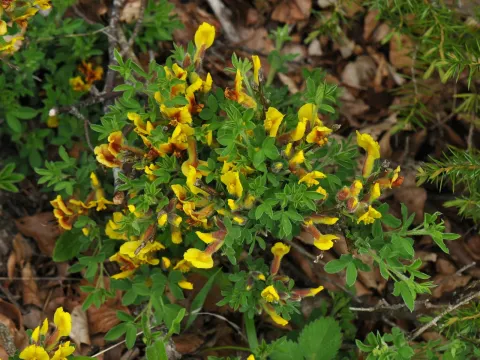
Procumbent broom
Cytisus demissus
Cytisus demissus, commonly known as procumbent broom, is a low-growing member of the Fabaceae family. Propagation is primarily achieved through seed sowing, which requires scarification to improve germination rates.
What the section contains
Procumbent broom
Seeds should be sown in early spring in well-prepared, loose soil. Providing a period of cold stratification can significantly increase the success rate of germination for this alpine-type shrub.
For vegetative propagation, semi-hardwood cuttings can be taken in late summer. These should be kept in a high-humidity environment with a well-draining rooting medium until new growth is observed.
When transplanting nursery-grown plants, ensure the root ball is not disturbed. The best time for planting is during the dormant season, either in early spring or late autumn.
Spacing should be managed to allow for proper airflow, as the procumbent habit of the plant can lead to dense matting, which may harbor moisture if not managed correctly.
The procumbent broom thrives in full sun, which is essential for maintaining its compact shape and promoting prolific flowering. Partial shade may result in leggy stems and reduced bloom density.
Soil requirements are relatively specific: the plant demands excellent drainage. It is naturally adapted to poor, sandy, or rocky soils, making it an excellent candidate for rock gardens and slopes.
It has a high tolerance for drought once established. It is important to avoid over-watering or over-fertilizing, as excessive nitrogen can lead to rapid, weak growth that is prone to damage.
The species is hardy and well-suited for temperate climates. In regions with severe winters, it may benefit from a layer of mulch to protect the root zone from extreme temperature fluctuations.
As a legume, Cytisus demissus is capable of fixing atmospheric nitrogen, allowing it to thrive in nutrient-poor environments where other garden plants might struggle.
Leaf spot is the most prevalent fungal disease, usually triggered by poor ventilation and high humidity. Proper site selection to ensure good air movement is the best cultural defense.
Powdery mildew can affect the foliage during hot, dry spells if the plant is stressed. Maintaining adequate spacing between shrubs helps prevent the spread of spores.
The broom moth larvae are the primary insect threat, as they feed on the foliage and terminal buds. Monitoring and manual removal are often sufficient for small landscape settings.
Aphids may occasionally target the new, succulent growth. These can usually be managed with insecticidal soaps or by encouraging natural predators like ladybugs.
Sanitation is key to managing pests and diseases; removing fallen debris from under the canopy reduces the overwintering sites for potential pathogens.