
Texas palo verde
Parkinsonia texana
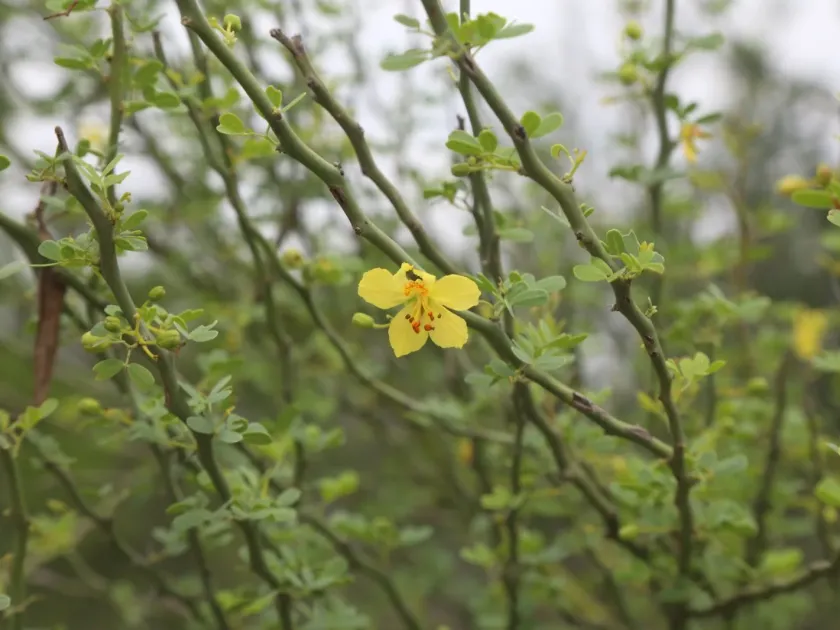
Description
Growing requirements
The Texas palo verde (Parkinsonia texana) is a hardy perennial tree species belonging to the Fabaceae family. It is widely recognized for its ability to thrive in extremely arid environments where other vegetation often struggles to survive.
Originating from the southwestern United States and northern Mexico, this species has evolved deep root systems and specialized foliage that allow it to conserve water efficiently during peak summer heat.
The plant requires full sun exposure for healthy development. It is an obligate sun-loving species; therefore, cultivation in shaded areas will significantly stunt its growth and reduce the plant's overall vigor.
Soil requirements are relatively modest, focusing primarily on excellent drainage. While it can adapt to various soil types, including rocky or gravelly substrates, it performs poorly in waterlogged soils where root aeration is restricted.
Agricultural management of this crop involves minimal maintenance once established. Due to its nitrogen-fixing capabilities, it contributes to soil fertility, making it a valuable candidate for land reclamation projects in degraded desert soils.
Main diseases and pests
The primary threats to Parkinsonia texana are related to fungal pathogens caused by improper water management. Root rot is a significant concern in areas where soils do not drain properly after heavy rains.
Pest pressures include wood-boring insects and foliage-eating beetles. Monitoring for signs of boring activity in the trunk is essential to prevent structural damage to the tree over the long term.
Fungal leaf spots can occur under conditions of high humidity or poor air circulation. To manage this, proper spacing during the initial planting phase is recommended to ensure adequate wind movement through the canopy.
Powdery mildew is another potential issue in more humid microclimates. Preventive measures such as keeping the crown clean of dead wood and maintaining the health of the tree are usually sufficient to control outbreaks.
Protecting young plants from browsing animals is necessary during the establishment phase, as the young bark and leaves can be attractive to local herbivores until the plant matures.