
Chinese false lupine
Thermopsis chinensis
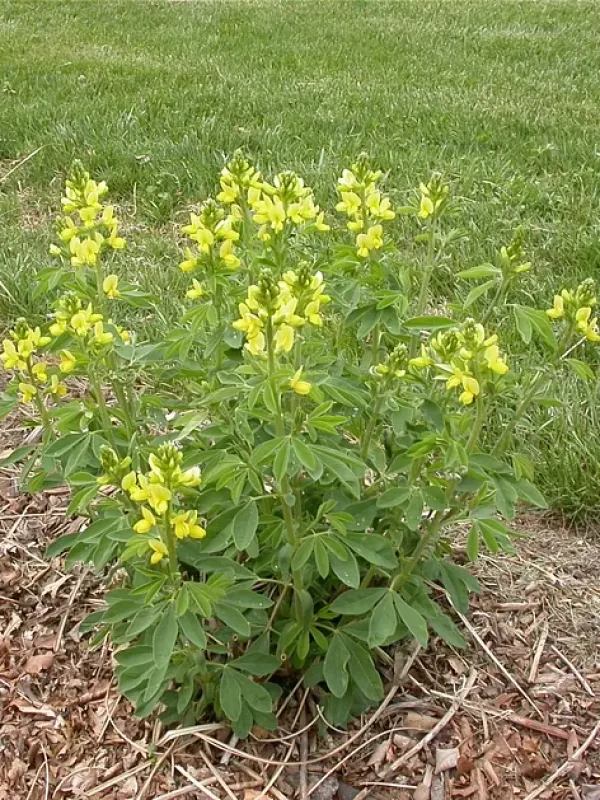
Description
Sowing dates
Chinese false lupine is a perennial herbaceous plant, and it is recommended to sow seeds either in early spring or before winter. The optimal time for field sowing is when the soil temperature reaches 8–10 degrees Celsius.
To improve germination, the seeds require pre-sowing scarification because their hard shell hinders moisture absorption. This mechanical process of disrupting the outer seed coat significantly accelerates the germination rate.
Seeds should be sown at a depth of 2–3 centimeters into loose, moist soil. A recommended planting scheme involves maintaining a row spacing of at least 45–60 centimeters to allow the root system to develop adequately.
Seedlings emerge gradually and require stable moisture levels during the early stages of vegetation. In the first months after sowing, the plant focuses on developing a robust root system, which slows down the visible growth of the aerial parts.
To ensure successful establishment on the plot, it is essential to keep the rows free of weeds. The crop is sensitive to shading during the sprout phase, so correct spacing and density are critical factors for achieving a successful future harvest.
Growing requirements
Chinese false lupine belongs to the Fabaceae family and is highly demanding regarding light exposure. For full growth and the accumulation of active alkaloids, the plant requires open, sun-exposed plots that warm up efficiently.
The crop has specific soil requirements; it prefers fertile sandy loam or light loamy soils. Good aeration and the absence of groundwater stagnation are mandatory, as excessive moisture leads to root rot.
The plant demonstrates moderate drought resistance due to its deep taproot system; however, it requires regular watering during the active vegetation and flowering periods. The soil pH should be near neutral or slightly alkaline.
The culture responds well to mineral fertilizers, particularly phosphorus-potassium compounds, which help strengthen immunity and improve winter hardiness. Nitrogen fertilizers are applied sparingly, as the plant can fix nitrogen from the atmosphere.
In regions with harsh winters, Chinese false lupine shows sufficient hardiness, but it requires protection against excessive soil freezing when there is no snow cover. Mulching with organic matter helps maintain optimal temperatures in the root zone.
Yield
The economic value of Chinese false lupine lies in the harvesting of its aerial green mass, which contains specific alkaloids. Maximum raw material yield is typically achieved in the second or third year of life when the plant forms a full bush.
Plantation productivity directly depends on agronomic care, including regular soil cultivation and weed control. Dry herb yields can range from 15 to 25 quintals per hectare when proper cultivation technologies are followed.
To increase yield, it is crucial to carry out timely harvesting of the aerial parts during strictly defined phenological phases. Delayed harvesting can lead to a decrease in the concentration of active substances, negatively affecting the final product's quality.
Biologically active substances accumulate in the stems, leaves, and flowers. Modern drying technologies allow for the preservation of the raw material's therapeutic value, ensuring its suitability for further processing by pharmaceutical companies.
An important factor for productivity is adhering to the plantation's operational lifespan. Generally, after 5–7 years of intensive cultivation, the efficiency of the field declines, necessitating the replanting of the crop in a new area.
Main diseases and pests
Like other legumes, Chinese false lupine is susceptible to specific fungal diseases. The most common are root rots, which occur when drainage is compromised in heavy clay soils.
Humid and cool weather promotes the development of powdery mildew on leaves, which significantly reduces the quality of the harvested raw material. Preventive treatments with fungicides during the vegetation period are recommended to control fungal pathogens.
Among pests, the nodule weevil poses the greatest danger, as it feeds on young leaves and damages the root system. Additionally, plantations may be attacked by aphids, which can act as vectors for viral infections.
Timely diagnostic assessment of the crops is the key to preserving the harvest. If pest damage is identified, biological or chemical insecticides should be applied according to established regulations.
Integrated plant protection includes crop rotation. It is not recommended to return Chinese false lupine to the same spot sooner than 3–4 years later to avoid the accumulation of pathogens and legume-specific pests in the soil.
Harvesting
The harvest of Chinese false lupine is carried out during the mass flowering phase, when the concentration of beneficial alkaloids reaches its peak. During this time, the plant is at its most saturated with biologically active substances.
The harvest is performed by mowing the aerial parts at a height of 5–10 centimeters above the soil surface. Using professional harvesting equipment allows for process optimization and minimizes the loss of valuable plant material.
After harvesting, the material must be sent for drying immediately. Using natural drying in the shade under a canopy or specialized drying chambers ensures that all quality characteristics of the harvested material are maintained.
During the drying process, it is important to ensure active air circulation to prevent overheating and mold formation. The optimal drying temperature should not exceed 40–50 degrees Celsius to avoid damaging thermolabile compounds.
The finished product is cleaned of impurities and sorted before storage. Quality packaging in natural material bags helps preserve the product's purity and protects it from moisture and direct sunlight during long-term storage.