
Round-leaf thermopsis
Thermopsis rhombifolia
Description
Sowing dates
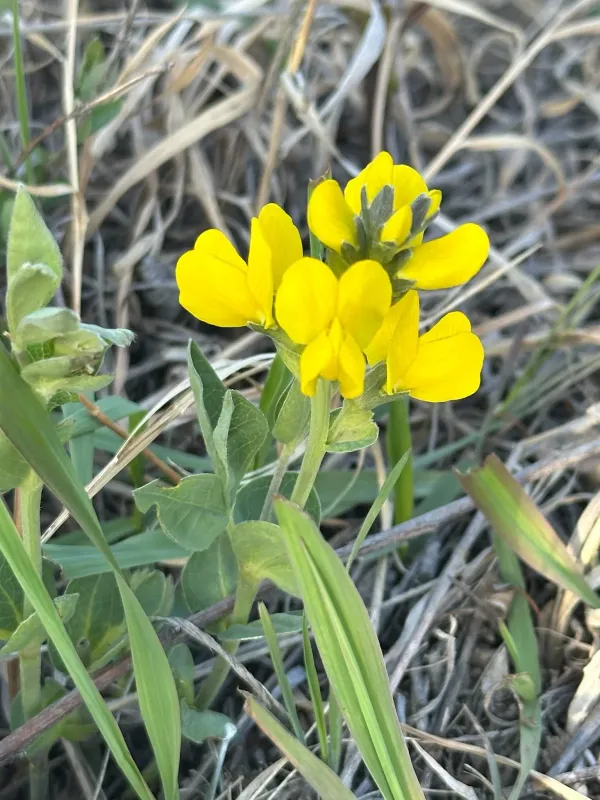
Round-leaf thermopsis (Thermopsis rhombifolia) is a perennial herbaceous plant belonging to the Fabaceae family. It is recognized for its robust root system, which allows the plant to thrive in various steppe and prairie-like environments.
The sowing process requires attention to seed dormancy. Because the seeds have a hard coat, they should undergo scarification before planting to ensure uniform germination. Sowing is typically carried out in late autumn or early spring when soil moisture is adequate.
When planting, seeds should be placed at a depth of 2 to 3 centimeters. Proper soil contact is essential for initial establishment, and rows should be spaced to allow for sufficient air circulation, which is vital for the health of the mature plants.
During the first year of growth, the plant focuses its energy on developing a deep taproot. Consequently, visible top growth may be limited. Weed control during this stage is critical, as young thermopsis plants are sensitive to competition for sunlight and nutrients.
Once established, the plant becomes highly resilient and capable of spreading via its underground rhizomes. This natural expansion helps in creating dense patches that successfully suppress competitive weeds over the long term.
Growing requirements
This species is highly heliophilous and performs best in open areas with full sun exposure. Adequate light is necessary to stimulate the synthesis of alkaloids, which are the main compounds of interest for the pharmaceutical industry.
Round-leaf thermopsis prefers well-drained, sandy, or light loam soils. The plant is sensitive to waterlogging; therefore, avoiding low-lying fields with poor drainage is essential to prevent root decay and other moisture-related diseases.
The plant demonstrates remarkable cold hardiness, reflecting its natural habitat in temperate grassland regions. It can withstand significant temperature fluctuations, making it a reliable perennial crop for climates with harsh winter periods.
While nitrogen-fixing capabilities are common in legumes, thermopsis benefits from a balanced supply of phosphorus and potassium. These nutrients support the development of high-quality biomass and improve the plant's overall durability and stress response.
Crop rotation should be strictly observed to maintain soil productivity. Returning the crop to the same plot should be avoided for several years to minimize the buildup of soil-borne pathogens and ensure sustainable yields over many seasons.
Main diseases and pests
Several insect pests, including various beetles and weevils, may feed on the foliage and reproductive structures of the plant. Integrated pest management strategies, focusing on biological controls, are preferred to maintain the purity of the medicinal product.
Fungal diseases, such as leaf spot and root rots, can occur during periods of prolonged high humidity. Ensuring proper planting density and minimizing leaf wetness are key cultural practices to keep these pathogens at bay throughout the growing season.
Powdery mildew might become an issue during hot, dry spells. Prompt removal of infected debris at the end of the harvest season helps reduce the amount of inoculum that remains in the soil for the following year.
Effective monitoring of the field is necessary to catch infestations early. If chemical intervention becomes necessary, it is crucial to use only substances approved for medicinal crops, ensuring that no residues remain on the harvested material.
By maintaining soil health and providing adequate space between plants, farmers can significantly reduce the pressure of pests and diseases, ensuring a healthy and productive crop without excessive reliance on synthetic pesticides.
Harvesting
The optimal harvest window is during the period of full flowering. At this stage, the plant reaches its peak concentration of active biochemical compounds, which are essential for its therapeutic value and industrial application.
Harvesting is performed using mechanical mowers at a height that avoids collecting the woody lower parts of the stem. Cleanliness is paramount, as the presence of soil, roots, or weeds in the harvested mass can lead to degradation of the batch quality.
Immediately after cutting, the biomass must be transported to a drying facility. Drying temperatures should be kept under 50 degrees Celsius to prevent the thermal degradation of delicate alkaloids and to maintain the plant's characteristic color.
The drying process relies on active ventilation to remove excess moisture efficiently. Preventing fermentation and mold growth during this stage is critical, as even slight spoilage can ruin an entire harvest and render it unsuitable for pharmaceutical use.
Proper storage involves keeping the dried product in a cool, dry, and dark environment. Using breathable materials for packaging helps maintain the shelf life and potency of the herb until it is processed into final medicinal products.