
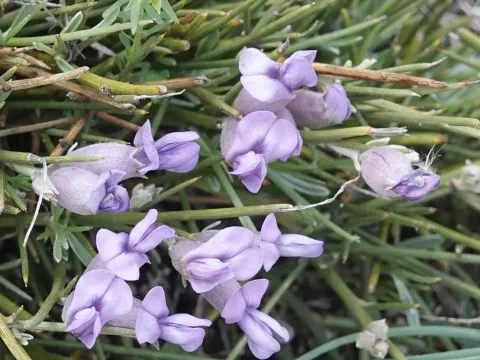
Erinacea
Erinacea
Propagation of Erinacea is typically achieved through seeds or semi-hardwood cuttings. Seeds require mechanical scarification to break dormancy and ensure uniform germination.
What the section contains

Erinacea
Sowing should take place in early spring using a well-drained, gritty compost mix. Keep the germination environment bright and maintain moderate moisture levels.
Cuttings are best taken in late summer, selecting healthy, sturdy shoots. Using a rooting hormone can significantly increase the success rate of propagation.
Seedlings develop very slowly, which is a key trait of this plant. Patience is required as they establish their root systems before being transplanted outdoors.
It is best to plant directly into final positions to minimize root disturbance, as Erinacea dislikes being moved once it has become established.
Erinacea is a genus of flowering plants belonging to the pea family (Fabaceae), native to the rocky and arid regions of the Mediterranean basin.
The plant thrives in full sun, requiring exposure to direct light for the majority of the day to maintain its compact, mounded growth habit.
Well-draining, stony, or sandy soils are essential for the health of this species. It is naturally adapted to nutrient-poor soils found in mountain terrain.
Climate adaptability includes a high tolerance for drought, making it an excellent candidate for xeriscaping or rock garden designs in warmer zones.
The species prefers neutral to alkaline soil conditions and should be protected from winter waterlogging, which is detrimental to its evergreen structure.
Root rot is the primary threat to Erinacea, usually occurring due to excessive watering or poor drainage in the growing medium during dormant seasons.
Powdery mildew can occasionally affect the foliage if humidity levels are consistently high and there is a lack of sufficient air movement.
Pests such as aphids may occasionally target tender new growth during the spring, though the plant's spiny nature generally provides a level of defense.
Spider mites can be a problem in prolonged hot and dry periods; periodic misting or horticultural soap applications can help mitigate this risk.
Maintenance and proper spacing are vital to prevent cross-contamination and ensure the plant remains vigorous against common environmental stressors.