
Erythrina abyssinica
Erythrina abyssinica
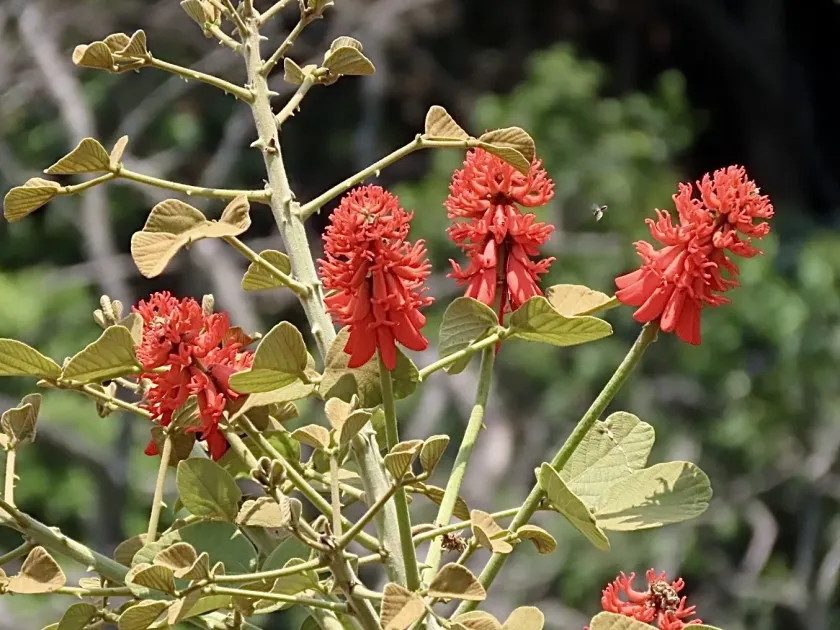
Description
Sowing dates
Erythrina abyssinica is primarily propagated through seeds, which require mechanical scarification to improve germination rates significantly.
The best sowing time aligns with the onset of the rainy season, ensuring the young seedlings receive adequate moisture for initial establishment.
Seeds are sown in well-drained nursery beds or containers at a depth of 2 to 3 centimeters, kept moist but not waterlogged until germination occurs.
Vegetative propagation via large cuttings is also highly effective, allowing for faster establishment when planting living fences or windbreaks in agricultural fields.
When transplanting, ensure proper spacing of at least 5 meters between trees to accommodate their broad, spreading canopy as they mature.
Growing requirements
Belonging to the Fabaceae family, this species is highly valued in agroforestry for its ability to fix nitrogen and improve soil quality.
The tree thrives in full sun exposure and is highly adapted to tropical and subtropical climates with distinct wet and dry seasons.
It prefers well-drained soils ranging from sandy loams to heavier clays, demonstrating remarkable resilience to a variety of soil types.
Erythrina abyssinica is exceptionally drought-tolerant once established, making it a reliable choice for reforestation and soil conservation projects.
In terms of management, the tree requires minimal intervention, though occasional pruning helps in shaping the tree and maintaining its health.
Yield
The yield of this tree is not measured in traditional crops but in the production of green manure and high-quality livestock fodder from its foliage.
Sustainable leaf harvesting can be conducted periodically, providing a nutrient-rich mulch that significantly boosts the yields of associated intercropped species.
In mature stands, the biomass production potential is high, especially when the tree is managed through regular pollarding techniques to stimulate new growth.
Economic returns are also derived from the production of seeds and floral resources, which are harvested for traditional medicinal and ornamental purposes.
Overall, the cumulative yield of ecosystem services, such as soil nitrogen enrichment and erosion control, provides significant long-term agricultural value.
Main diseases and pests
Borers are the most significant pests for this species, as their larvae tunnel into the trunk and branches, often leading to structural weakness.
Fungal pathogens causing leaf spots and bark cankers can become problematic in areas with high humidity and poor air circulation within the canopy.
Termites can occasionally attack stressed or young trees, particularly in dry regions, necessitating proper site preparation and monitoring.
Over-harvesting of foliage for fodder can weaken the tree, making it more susceptible to opportunistic infections and environmental stresses.
Proper field hygiene, including the removal of heavily infested branches, is essential to minimize the risk of spreading pathogens to neighboring trees.