
Hedgehog broom
Erinacea anthyllis
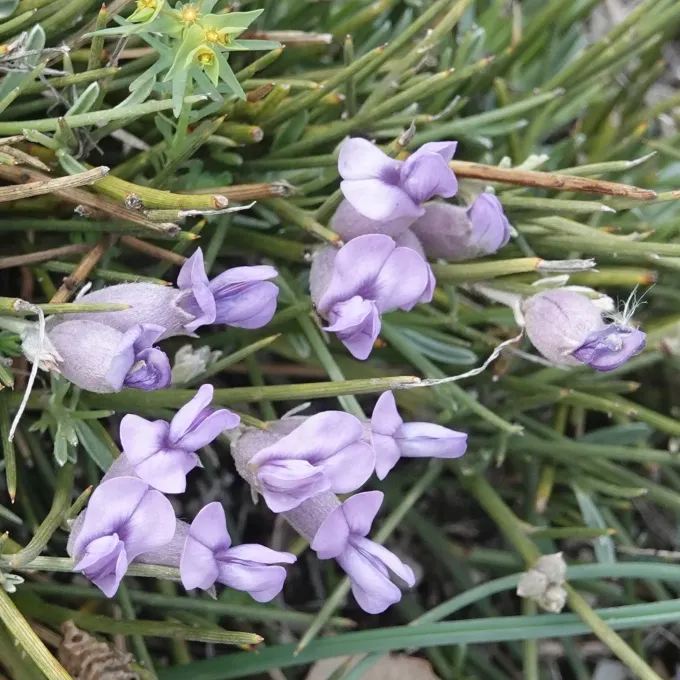
Description
Growing requirements
Hedgehog broom (Erinacea anthyllis) is a unique perennial shrub belonging to the Fabaceae family, prized for its dense, mounded habit and sharp, spine-tipped branches.
Originating from the rocky, arid landscapes of the Western Mediterranean, this plant is perfectly adapted to survive in nutrient-poor and calcareous soils.
The primary cultivation requirement is superior soil drainage, as the plant is highly susceptible to root rot in waterlogged conditions throughout the growing season.
This species thrives in full sun, requiring exposure to direct light for several hours a day to maintain its compact shape and ensure consistent floral production.
Minimal fertilization is required; in fact, an excess of nitrogen can lead to excessive, non-hardy growth, making the plant more vulnerable to frost and mechanical damage.
Main diseases and pests
The most significant threat to the health of the Hedgehog broom is water accumulation at the crown, which facilitates the development of various soil-borne pathogens.
While relatively resistant to common garden pests, it may occasionally host aphids that cluster on the succulent parts of the plant during periods of drought stress.
Poor circulation between the dense branches can create micro-climates that support fungal growth, necessitating careful site selection to ensure consistent airflow.
Preventative care involves keeping the base of the plant free from leaf litter or damp mulch, which can retain moisture and promote decay in the central core.
In cases of severe infestation or disease, standard systemic fungicides or horticultural soaps are effective, provided they are applied with attention to the dense structure of the bush.