
Erythrina berteroana
Erythrina berteroana
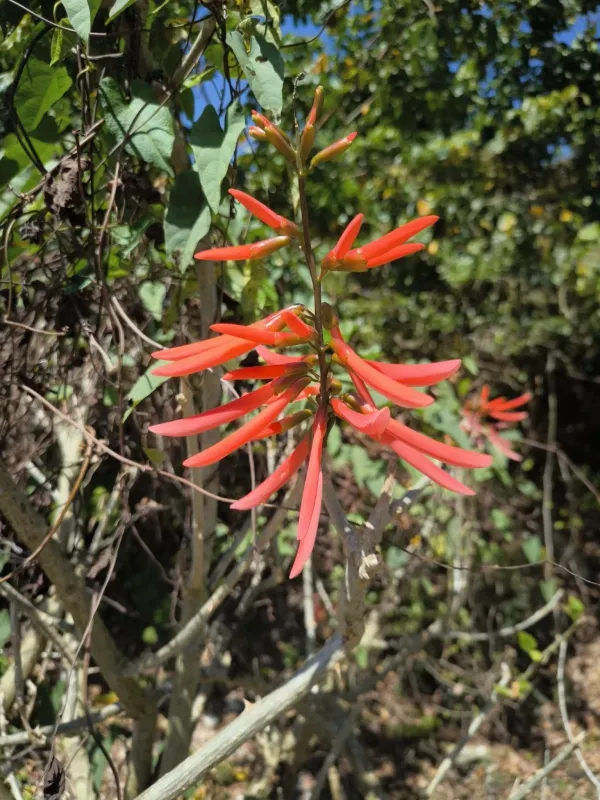
Description
Sowing dates
Erythrina berteroana is primarily propagated through vegetative means, specifically using stem cuttings, which ensures rapid establishment and high survival rates under tropical conditions.
Cuttings should be taken from mature, healthy branches, typically measuring about one meter in length, and planted directly into the ground at the beginning of the rainy season.
While seed propagation is possible, it involves scarification and nursery management, which is more time-consuming compared to the direct planting of vegetative cuttings.
When used for living fences, cuttings are spaced closely—often 50 to 100 centimeters apart—to create a functional and durable barrier for livestock management.
Minimal soil preparation is needed, though ensuring a firm contact between the cutting and the soil is essential to stimulate early root development and plant survival.
Growing requirements
This species thrives in tropical climates and requires high levels of solar radiation, as shade competition can significantly hinder its growth rate and biomass production.
Erythrina berteroana is highly adaptable to various soil textures, ranging from heavy clays to lighter loams, provided that there is adequate drainage in the root zone.
The plant exhibits remarkable tolerance to periodic drought, a trait that makes it particularly valuable for farming systems in regions with pronounced dry seasons.
Being a legume, it contributes to soil fertility by fixing atmospheric nitrogen, which benefits both the plant itself and surrounding vegetation in agroforestry systems.
Temperature is a key factor, as the plant prefers warm conditions and is susceptible to damage from frost, which limits its cultivation to tropical and subtropical latitudes.
Yield
The plant is highly valued for its abundant green biomass, which serves as a high-quality protein supplement for ruminants, containing 18% to 25% crude protein.
Yield efficiency is directly linked to pruning management; regular harvesting stimulates the production of tender, nutrient-rich vegetative growth rather than woody stems.
In optimal conditions, the plantation can sustain multiple harvests per year, ensuring a steady supply of fodder throughout the growing season.
The biomass is easily digestible, which contributes to higher livestock productivity and better weight gain compared to lower-quality forage grasses alone.
Management must focus on maintaining a balance between biomass removal and the plant's need to store energy reserves in its root system for regrowth after each harvest.
Main diseases and pests
The most significant threat to Erythrina berteroana is the defoliating moth larvae, which can quickly reduce leaf area if not managed through regular monitoring and intervention.
High humidity and poor air circulation can promote fungal diseases, manifesting as leaf spots; this can usually be mitigated by proper pruning and spacing.
Minor pests, including various aphids and mites, may target young shoots, though they rarely cause economic damage to established, healthy plants.
Integrated pest management, favoring natural predators and proper cultural practices, is recommended to keep pest populations below the economic injury level.
The species possesses high natural resilience, allowing it to recover quickly from minor pest pressure once environmental conditions stabilize.
Harvesting
Harvesting is typically done manually using machetes, which allows for selective pruning that preserves the structural integrity of the plant for future regrowth.
The timing of the harvest is critical; foliage should be collected while still succulent and before the stems become overly lignified, ensuring maximum nutritional value.
Harvested material is most beneficial when fed fresh, but it can also be air-dried to create hay or processed into silage for storage during periods of extreme scarcity.
The cutting height should be carefully managed to avoid damaging the main branches, ensuring that the plant continues to produce high volumes of leaves for years.
A well-planned harvesting schedule allows farmers to maximize the total seasonal yield without compromising the long-term health and vitality of the plantation.