
Calpurnia aurea
Calpurnia aurea
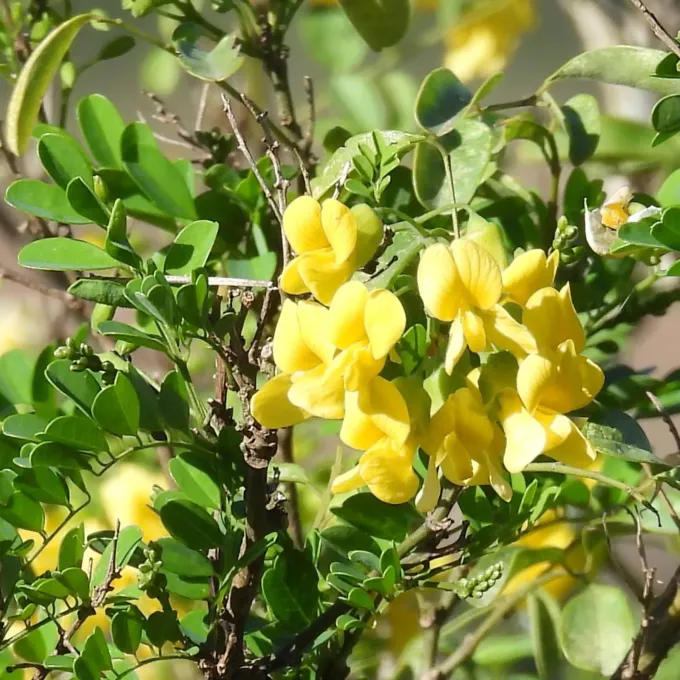
Description
Sowing dates
Calpurnia aurea is typically propagated through seeds, which require mechanical scarification of the seed coat to ensure uniform and efficient germination.
Sowing should take place in a well-draining potting mix, maintaining a warm and humid environment to mimic the plant's native tropical conditions.
Seedlings develop relatively quickly and should be transplanted into individual pots once they have produced several sets of true leaves to prevent overcrowding.
Cuttings can also be used for propagation, involving semi-hardwood stems treated with rooting hormones to enhance successful root development in a high-humidity chamber.
Proper spacing between seedlings is crucial to ensure adequate airflow and sunlight penetration, which promotes stronger stem development and overall plant health.
Growing requirements
Belonging to the Fabaceae family, Calpurnia aurea is native to the African continent and is widely recognized for its beautiful racemes of bright yellow flowers.
The plant thrives in full sun but can tolerate light shade, making it a versatile choice for landscaping in warm temperate to tropical climates.
It prefers well-drained, fertile soil and is notably drought-tolerant once fully established, although consistent irrigation enhances flower production.
As a legume, it has the capacity to fix atmospheric nitrogen, which contributes to soil fertility, although it still benefits from occasional organic mulching.
Protection from severe frost is mandatory; in colder zones, it must be grown in large containers that can be moved indoors during winter months.
Main diseases and pests
Common pests include aphids and spider mites, which can infest the tender foliage during dry spells, causing leaf curling and reduced vigor.
Root rot caused by Phytophthora species is a major threat in poorly drained soils, often exacerbated by overwatering during cooler periods.
Powdery mildew may occur if the plant is grown in areas with poor ventilation, requiring localized fungicide treatments or improved plant spacing.
Integrated pest management, including regular monitoring and the introduction of natural predators, is recommended to keep pest populations under control.
Maintaining a clean growing area by removing fallen leaves and debris reduces the risk of fungal spores overwintering near the base of the plant.