
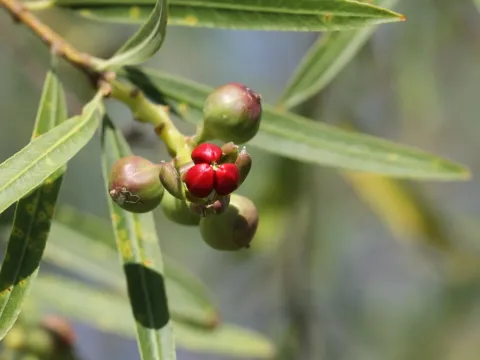
Sapium
Sapium
Sapium is a heat-loving tree species that requires specific conditions for successful establishment. Planting usually begins in early spring once the risk of frost has passed.
What the section contains

Sapium
Seeds of Sapium often feature a waxy coating which can delay germination. Pre-treatment through scarification or cold stratification is recommended to improve the emergence rate.
In modern agricultural practices, nursery-grown saplings aged 1-2 years are often preferred over direct seeding to ensure higher survival rates and faster establishment.
When planting, it is crucial to maintain adequate spacing to prevent overcrowding as the tree develops its canopy, which is vital for long-term yields.
The planting site should be prepared with well-drained, nutrient-rich soil to support the initial root growth and protect the young tree from water stress.
A member of the Euphorbiaceae family, Sapium thrives in subtropical to tropical climates where temperatures remain consistently warm throughout the growing season.
The plant is remarkably tolerant of saturated soil conditions, making it an ideal choice for wetlands or riverbanks where other crop species might suffer from root rot.
Optimal growth requires full sun exposure. While the tree can tolerate partial shade, insufficient light will lead to significant reductions in flowering and seed production.
The soil should be fertile and preferably have a slightly acidic to neutral pH. Regular fertilization is necessary to support the high nutritional demands of the tree.
Protection from extreme wind is also recommended, especially for younger trees, to prevent physical damage and ensure straight, robust development of the main trunk.
The primary value of Sapium lies in its seeds, which produce a specialized fat known as Chinese vegetable tallow, harvested for various industrial purposes.
A mature tree reaches its peak productivity between 10 and 25 years of age. Consistent maintenance and pruning contribute significantly to maximizing the annual harvest.
Seed yield varies depending on the specific cultivar and environmental conditions, but intensive management can result in a high output of both solid fat and liquid oil.
The wax derived from the fruit is highly valued in the production of soaps, candles, and high-quality coatings, highlighting the economic potential of the plant.
Furthermore, the extraction of oil from the seed kernels provides a secondary product, increasing the overall profitability of the plantation per hectare.
Sapium is susceptible to several pests, particularly those that feed on the foliage, which can diminish the plant's overall health and vitality if left unchecked.
Fungal infections are a significant threat, especially during seasons with high humidity, which can lead to leaf spots and decaying of plant tissue.
- Leaf beetles — primary defoliators that impact tree growth.
- Powdery mildew — a common fungal pathogen occurring in humid climates.
- Stem borers — can weaken the tree structure if infestations are heavy.
Management strategies involve integrated pest control, including the application of safe fungicides and systematic monitoring of the plantation throughout the year.
Good cultural practices, such as proper spacing and removal of diseased debris, are essential to minimize the risk of pest and disease outbreaks in the orchard.
Harvesting typically occurs in the autumn when the fruit capsules ripen, turn brown, and split open to reveal the white, wax-covered seeds inside.
Timing is critical, as heavy rainfall after the capsules split can wash away some of the surface wax, significantly reducing the quality of the raw material.
Harvesting methods include manual collection or the use of mechanical shaking equipment, followed by careful gathering of the seeds from the ground or nets.
Post-harvest handling requires rapid drying of the seeds to prevent fermentation and fungal growth, which are the main causes of quality degradation during storage.
The processing involves heating the seeds to melt the tallow layer, which is then refined and purified for various uses in the chemical and cosmetic industries.