
Sapium haematospermum
Sapium haematospermum
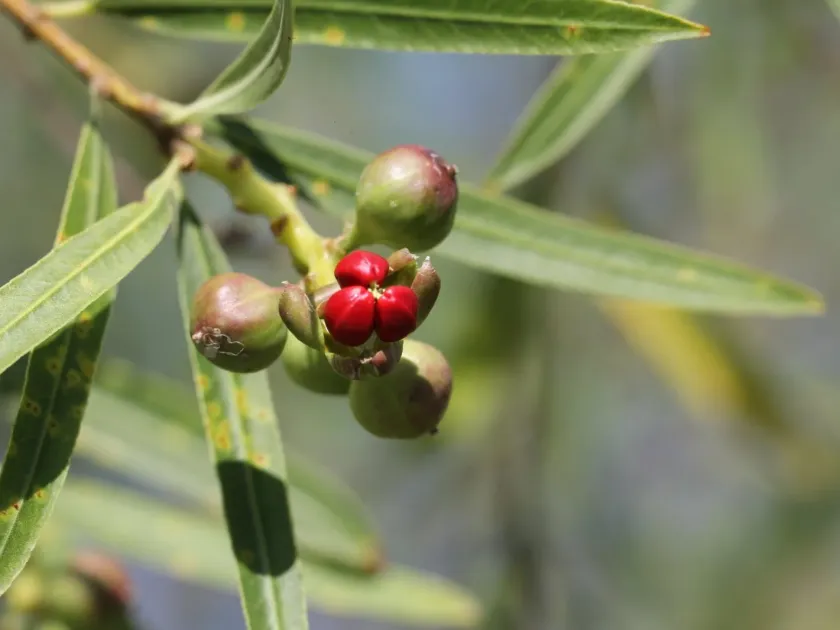
Description
Sowing dates
Propagation of Sapium haematospermum is commonly performed through seeds or stem cuttings. Seeds require a period of cold stratification to break dormancy and ensure consistent germination rates.
Sowing in a controlled greenhouse environment is recommended for early spring to provide the necessary 20–22°C temperatures required for successful seedling development.
Use a sterile, well-draining seed-starting mix to prevent damping-off. Keep the moisture levels consistent throughout the initial growth phase of the seedlings.
Seedlings should be transplanted once they develop several sets of true leaves. A gradual hardening-off process is essential before moving plants to an outdoor location.
In regions with frost-free climates, direct sowing can be attempted in late spring, provided the soil has warmed up sufficiently to support active root development.
Growing requirements
As a member of the Euphorbiaceae family, Sapium haematospermum originates from South American habitats and thrives in full sun, which is crucial for maintaining foliage density.
The ideal soil profile consists of fertile, loamy, and well-draining earth. Improving heavy clay soils with organic matter can significantly enhance the plant's overall vigor.
While the tree shows moderate drought tolerance once established, consistent moisture is required during the initial years and throughout the peak summer heat.
The plant is sensitive to severe frost; therefore, in temperate zones, it is frequently managed as a container plant or protected during the harsh winter months.
Regular pruning is not just for shape; it helps in managing the plant size and improves light penetration, which is vital for the health of internal branches.
Main diseases and pests
The primary pests affecting Sapium haematospermum are sap-sucking insects, including aphids and spider mites, which thrive in hot and dry environmental conditions.
Poor ventilation and high humidity levels can lead to the development of fungal pathogens, such as powdery mildew, which affects the leaves and stems.
Implementing a proper pruning schedule helps maintain airflow within the canopy, significantly reducing the risk of fungal outbreaks in dense plantings.
Integrated pest management, including the use of systemic insecticides and neem oil, is effective when signs of infestation are identified at an early stage.
Operators must handle the tree with care because the milky sap, characteristic of the Euphorbia family, can cause irritation to the skin and mucous membranes.
Harvesting
The main objective of cultivating Sapium haematospermum is its ornamental value, as the tree provides excellent aesthetic appeal for park landscaping and gardens.
Seed harvesting occurs in autumn when the fruit capsules transition to a distinct red, signalling maturity. Once collected, they should be dried to facilitate seed release.
Ongoing maintenance involves pruning to establish a strong structure. This practice encourages denser foliage, making the plant a preferred choice for screening.
The species also has utility in erosion control on embankments due to its robust root system, which stabilizes soil effectively in tropical and subtropical regions.
Proper management of the tree ensures a balance between ornamental beauty and long-term vitality, contributing to the health of the local landscape ecosystem.