
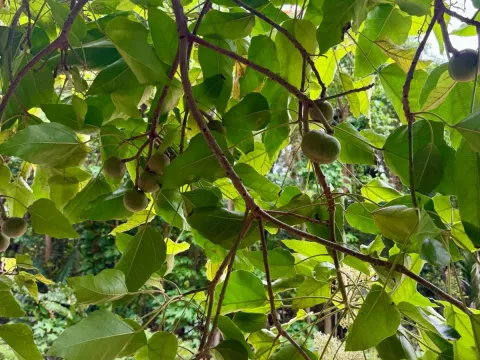
Candlenut
Aleurites moluccanus
Candlenut (Aleurites moluccanus) is primarily propagated through seeds, which should be fresh to ensure high germination rates. The seeds have a hard, woody shell that often requires treatment to facilitate water absorption.
What the section contains
Candlenut
Scarification or soaking the seeds in water for several days is a common pre-sowing practice. This process helps soften the testa, allowing the embryo to break through the shell more efficiently after planting in the nursery beds.
Seedlings are nurtured in nurseries under controlled light and humidity until they reach a height of approximately 30 to 45 centimeters. A well-drained substrate is essential at this stage to prevent rot.
The transplantation to the field should ideally coincide with the onset of the rainy season to allow the root system to establish without excessive heat stress. Proper spacing is crucial to ensure future tree growth.
Young plants benefit from partial shading during their first few months in the field. This protects the tender leaves from scorching sun and helps the plant develop a robust stem before being fully exposed.
As a member of the Euphorbiaceae family, the candlenut tree thrives in tropical climates characterized by high humidity and consistent warmth. It is highly sensitive to frost and cold, limiting its commercial range to equatorial zones.
The tree prefers deep, fertile, and well-drained soils. While it exhibits tolerance for various soil types, including rocky or slightly acidic soils, its productivity is significantly higher in rich, loamy textures.
Sunlight is a critical factor for development; the species is strongly photophilous. Planting in full sun promotes dense crown development and enhances the production of fruits, which are the main source of oil.
Water requirements are moderate, but the tree demands excellent aeration. Soils prone to waterlogging are unsuitable, as oxygen-deprived conditions quickly lead to root decay and overall decline of the specimen.
Maintenance of the plantation involves keeping the area around the base of the tree clear of weeds, which compete for nutrients and water. Mulching can be used to maintain soil moisture during drier months.
Candlenut trees begin to yield fruit around the age of 3 to 5 years. Once matured, the tree can remain productive for several decades, providing a reliable source of oilseeds for agricultural enterprises.
A mature tree produces between 30 and 80 kilograms of nuts annually. The yield quality is highly dependent on effective pollination and consistent moisture during the fruiting period, which varies by region.
The fruit, which contains one or two seeds, is harvested after falling to the ground. The kernel is highly oleaginous, often containing up to 60 percent oil by weight, making it an economically valuable crop.
Post-harvest processing includes cleaning and drying the seeds to prevent rancidity. Proper management of the harvest cycle is essential for maintaining the quality of the oil for industrial applications.
Selective breeding programs aim to increase the oil content and ensure a more uniform maturation period for easier harvesting. This focus helps in optimizing the profitability of large-scale candlenut farming.
The primary threats to candlenut plantations include fungal diseases that affect leaves and branches, often triggered by excessive humidity or poor plantation ventilation. These conditions can devastate a young crop.
Root rot caused by Phytophthora species is a serious concern, especially in fields with poor drainage. Implementing strict irrigation controls and ensuring field hygiene are the best defenses against these pathogens.
Insect pests, including various types of borers and caterpillars, can cause significant foliar damage. Integrated pest management strategies, focusing on biological controls, are preferred to minimize chemical usage.
Environmental stress, such as strong winds, can cause limb breakage in older trees. Windbreak planting at the perimeter of the field is a recommended practice to mitigate these physical hazards.
- Regular pruning to improve airflow within the canopy.
- Sanitization of the plantation to remove decaying organic matter.
- Monitoring for early symptoms of fungal leaf spots.
- Maintaining optimal spacing to prevent disease spread.
Harvesting candlenuts is a labor-intensive process, usually done by hand as the nuts fall from the trees upon reaching full maturity. Daily gathering is necessary to avoid quality degradation from ground moisture.
The harvested nuts are then cleaned of their outer husk. The seeds are subsequently dried in the sun or using mechanical dryers to reduce moisture content, which is vital for long-term stability and storage.
Dry conditions are imperative for storage; moisture will promote mold growth, which destroys the oil quality. Warehouse facilities should be cool, dry, and well-ventilated to keep the nuts in top condition.
Processing involves crushing the dried kernels to extract the oil. Candlenut oil is prized for its drying properties and is widely used in the paint, varnish, and cosmetic industries due to its unsaturated fat content.
Efficient logistics from the field to the pressing facility is key to a successful operation. The residues from pressing are often repurposed as organic amendments or animal feed, creating a sustainable production cycle.