
Canary Islands Spurge
Euphorbia lamarckii
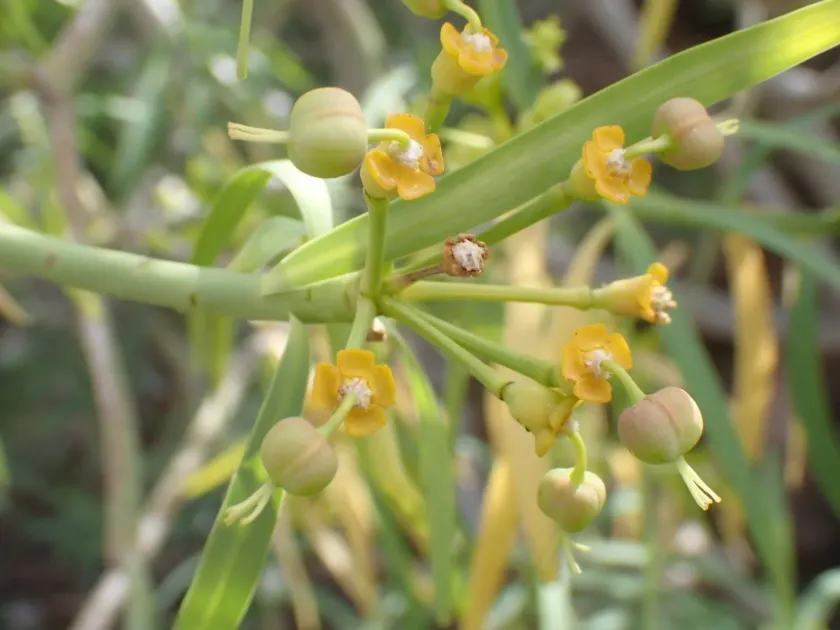
Description
Growing requirements
Euphorbia lamarckii, commonly known as the Canary Islands Spurge, is a perennial shrub belonging to the Euphorbiaceae family. It is native to the Canary Islands, where it thrives in arid and rocky coastal environments.
This species requires well-draining, mineral-rich, or sandy soil to simulate its natural habitat. The soil structure must prevent water retention around the root collar to ensure the plant's long-term health and structural integrity.
The culture is highly photophilous and demands full sun exposure for optimal metabolic activity. Insufficient light leads to etiolation, where the stems become weak and prone to bending under their own weight.
Climate requirements include warm temperatures with minimal seasonal fluctuations. While it can withstand occasional heatwaves, it is susceptible to frost and requires protection if temperatures drop near or below freezing point.
Water management is the cornerstone of its agronomy. Irrigation should be applied deeply but infrequently, allowing the substrate to dry out completely between sessions to mimic natural rainfall patterns in its native habitat.
Main diseases and pests
Fungal pathogens represent the primary threat to Euphorbia lamarckii. Overwatering often leads to Phytophthora or Pythium infections, which rapidly rot the root system and can be fatal to the entire plant structure.
Pest management focuses on controlling sap-sucking insects such as mealybugs and spider mites. These pests thrive in indoor or greenhouse conditions where air circulation is poor and humidity levels are inconsistent.
Chemical control should be implemented judiciously. Horticultural oils or systemic insecticides must be applied carefully to avoid damaging the plant's protective epidermis, which is adapted to extreme aridity.
Preventative cultural practices include maintaining proper spacing between plants to allow for airflow. Removing dead or necrotic tissue is essential to minimize the surfaces available for fungal colonization.
It is vital to maintain strict safety protocols when handling the crop, as the white latex sap is highly irritating. Protective clothing, including gloves and eye protection, is mandatory when performing pruning or harvesting operations.