
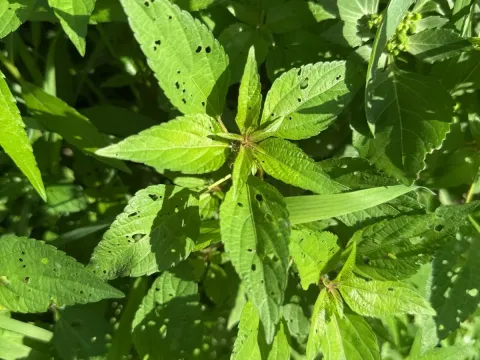
Three-seeded mercury
Acalypha rhomboidea
Acalypha rhomboidea is a summer annual weed that typically begins its life cycle when soil temperatures reach stable levels during the mid-to-late spring season.
What the section contains
Three-seeded mercury
Germination is highly dependent on moisture availability, with the most vigorous flushes occurring after spring precipitation events during April and May.
The plant exhibits a prolonged emergence pattern, meaning that seedlings can appear in multiple waves throughout the growing season, complicating control efforts.
Seeds are capable of remaining dormant in the soil seed bank for extended periods, maintaining the potential for re-infestation for several years.
In intensive agricultural systems, timing of pre-plant tillage and post-emergence management must account for this extended germination window.
This species thrives in open, sunny environments but displays sufficient shade tolerance to persist within row crop canopies.
It prefers fertile, loamy to sandy soil textures and responds positively to high levels of available nitrogen, making it a strong competitor in fertilized crops.
The plant is highly adaptable to various climatic conditions, showing resilience to both moderate dry spells and fluctuating temperature regimes.
Soil pH levels ranging from slightly acidic to neutral provide the most favorable conditions for rapid vegetative growth and reproductive success.
Proper field drainage and soil structure are essential for the plant, as it avoids waterlogged conditions while thriving in well-aerated fertile topsoil.
As a member of the Euphorbiaceae family, it can harbor various viruses and fungal pathogens that negatively impact neighboring commercial crops.
The plant serves as an alternate host for several insect pests, including mites and aphids, which can migrate to crops after the weed matures.
Direct competition for light, water, and nutrients significantly stunts the development of cash crops if the weed is not managed early in the season.
Chemical control is often complex, as some populations have shown tolerance to common herbicides used in broadleaf weed management programs.
Integrated weed management, including cultural practices and chemical interventions, is necessary to prevent severe yield losses in heavily infested areas.