
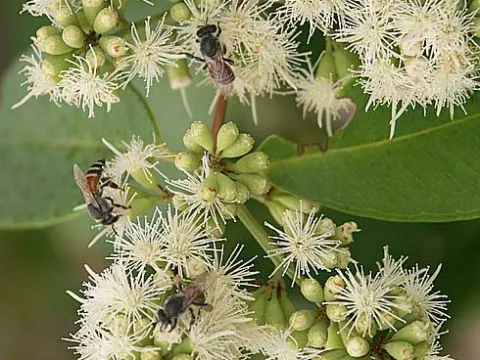
Tetracera
Tetracera
Tetracera is a genus of woody vines and shrubs belonging to the Dilleniaceae family. Naturally, these plants primarily inhabit tropical regions across Africa, Asia, and the Americas, favoring moist forests and open areas with intense solar radiation throughout the year.
What the section contains
 Tetracera akara
Tetracera akara
Tetracera akara
 Tetracera breyniana
Tetracera breyniana
Tetracera breyniana
 Tetracera fagifolia
Tetracera fagifolia
Tetracera fagifolia
 Tetracera macrophylla
Tetracera macrophylla
Tetracera macrophylla
 Tetracera masuiana
Tetracera masuiana
Tetracera masuiana
 Tetracera potatoria
Tetracera potatoria
Tetracera potatoria
 Tetracera scandens
Tetracera volubilis
Tetracera volubilis
Tetracera scandens
Tetracera scandens
Tetracera volubilis
Tetracera volubilis
Tetracera
For the normal development of the crop, consistently high air temperatures are required, as the plant cannot tolerate any level of frost. Species within this genus are highly dependent on moisture, making regions with a defined rainy season and high relative humidity the most suitable for cultivation.
Soil preferences for Tetracera include well-drained, fertile substrates with an acidic to neutral pH level. The vigorous growth of these vines necessitates the presence of vertical supports, allowing the stems to climb and develop a dense canopy of foliage.
Biologically, Tetracera possesses tough, often scabrous or pubescent leaves, which serve as an adaptation to tropical climates by protecting the plant from excessive heat and water loss. The root system is robust, allowing the plant to absorb nutrients effectively in the competitive environment of the rainforest.
The economic use of Tetracera has historically been linked to traditional medicine, where various plant parts are used to prepare decoctions and extracts. Additionally, due to the remarkable tensile strength of the stems in some species, they are often utilized in local weaving and construction as natural cordage.