
Tetracera fagifolia
Tetracera fagifolia
Description
Growing requirements
Tetracera fagifolia is a woody vine belonging to the Dilleniaceae family. This species is native to the tropical forests of South America, with a broad distribution range covering various regions of Brazil and the Amazon basin.
The plant thrives in fertile, well-drained soils rich in organic matter. Optimal growth requires a high-humidity environment, consistent with the climatic conditions of the tropical rainforest floor and mid-canopy levels.
Regarding climate, the plant requires consistent warmth and protection from frost or sudden cold snaps. It displays high adaptability to light levels, thriving in full sun while maintaining vitality in semi-shaded conditions.
Agronomic management involves providing sturdy vertical support systems to facilitate the plant's climbing growth habit. Proper soil moisture management is essential, as the plant does not tolerate prolonged drought during its active growth phase.
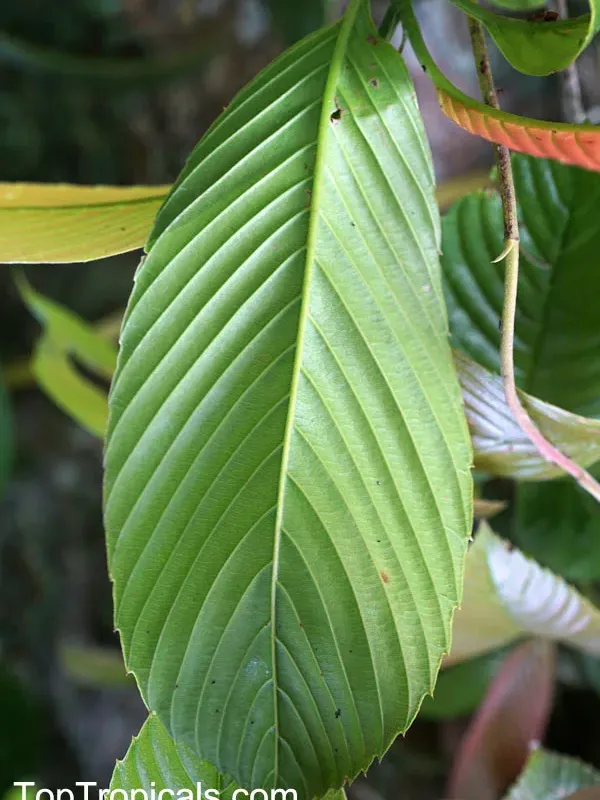
Botanically, it is recognized by its coarse, scabrous leaves which possess distinct tactile qualities. The plant exhibits vigorous vegetative growth, making it a dominant element in the local understory vegetation where it occurs.
Harvesting
The primary utility of Tetracera fagifolia is rooted in both traditional knowledge and potential industrial applications. Its leaves are renowned for their natural abrasive surface, often utilized for polishing wood and bone.
Ethnobotanical records indicate that local communities use the plant for medicinal purposes. Specifically, extracts from the bark and foliage are used to treat inflammatory conditions, supported by traditional usage patterns.
Harvesting strategies involve the manual collection of mature leaves. To ensure the chemical integrity of the harvested material, it is typically subjected to controlled drying in shaded, well-ventilated areas.
The stems of the vine are valued for their structural strength and flexibility. They are often collected and processed for use in traditional weaving, basketry, and as cordage for temporary agricultural structures.
Current research continues to evaluate the chemical profile of the plant, focusing on its secondary metabolites. This contributes to a growing interest in Tetracera fagifolia for potential cosmetic and pharmaceutical product development.