
Tetracera macrophylla
Tetracera macrophylla
Description
Growing requirements
Tetracera macrophylla is a robust woody vine belonging to the Dilleniaceae family. Native to the humid tropical forests of Africa and Southeast Asia, this species thrives in environments characterized by high humidity, constant warmth, and dappled sunlight.
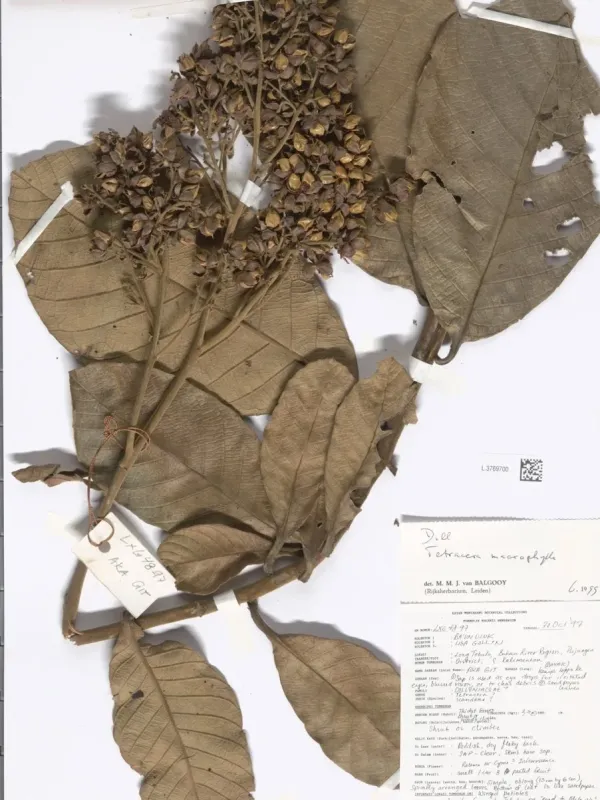
The plant is botanically recognized for its large, leathery leaves which possess a distinctive rough texture. Historically, this abrasive quality has been utilized by indigenous communities as a natural tool for smoothing wood and cleaning various surfaces.
To cultivate this species successfully, one must replicate tropical conditions with year-round temperatures typically above 20 degrees Celsius. High atmospheric moisture is essential for the plant to maintain its turgidity and overall metabolic functions.
The preferred soil type is a loose, well-draining mixture rich in organic matter. While the plant appreciates moisture, it is highly sensitive to waterlogged conditions, which can quickly lead to root decay and physiological stress.
Agricultural management requires the provision of strong structural supports, as the plant naturally seeks to climb towards the canopy. Regular pruning is recommended to manage growth habit and ensure that the foliage receives adequate light for photosynthesis.
Main diseases and pests
Fungal pathogens represent the primary threat to Tetracera macrophylla, especially in greenhouse environments with stagnant air. Leaf spot diseases are common when ventilation is insufficient to dry the foliage after heavy irrigation.
Pests such as spider mites and mealybugs can cause significant damage by feeding on the sap of young, tender leaves. These pests are particularly problematic in dry indoor conditions, which are contrary to the plant's natural habitat requirements.
Root rot, caused by overwatering or contaminated soil media, is a critical issue that can prove fatal to the plant. Strict adherence to irrigation schedules and the use of well-aerated potting mixes are essential preventative measures.
Mechanical damage to the bark and stems can provide entry points for secondary infections. Careful handling during maintenance and the use of disinfected cutting tools are standard best practices for ensuring plant health.
Effective monitoring for signs of stress or pest infestation is crucial. Because the plant is often used for its foliage quality, any significant damage from insects can render the harvested material unsuitable for its intended applications.