
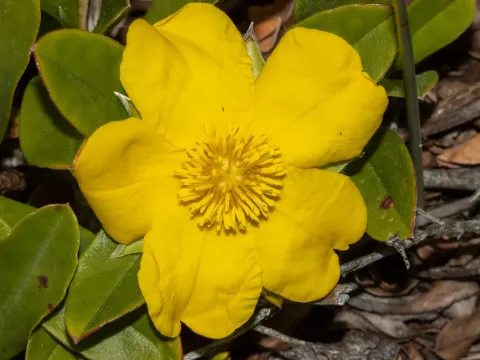
Hibbertia
Hibbertia Andrews
Hibbertia is a genus of evergreen shrubs and trailing vines belonging to the Dilleniaceae family. Native primarily to Australia, these plants are known for their vibrant yellow flowers and are often cultivated for ornamental purposes in mild climates.
What the section contains


Hibbertia
The plant requires bright, indirect light to thrive and bloom effectively. In greenhouse conditions, ensuring adequate light exposure is crucial, as low light levels lead to etiolated stems and a reduction in flower production.
Well-draining, slightly acidic soil is essential for Hibbertia health. A mix containing peat, pine bark, and coarse sand provides the necessary aeration for roots to develop without the risk of waterlogging.
Temperature requirements remain consistent with subtropical plants; Hibbertia prefers daytime temperatures between 18°C and 25°C. Protection from frost is mandatory, as most species are not tolerant of freezing temperatures.
Regular but controlled watering is necessary. It is recommended to allow the top few centimeters of the substrate to dry out before the next watering session to prevent root rot and maintain plant vigor.
Pests such as spider mites, mealybugs, and aphids represent the most significant threat to Hibbertia. These insects are particularly problematic in environments with low humidity and poor ventilation.
Fungal issues, including root rot and leaf spot, are often secondary consequences of poor drainage or overwatering. Maintaining a sterile substrate and clean tools is vital to prevent these infections.
Early detection of infestation is key; checking the underside of leaves for webs or white cotton-like masses helps in mitigating damage before it impacts the entire specimen.
Applying horticultural soaps or systemic insecticides is effective when dealing with stubborn infestations, provided the product is suitable for delicate greenhouse crops.
Environmental stress, such as sudden shifts in humidity or drafts, can weaken the plant, making it more susceptible to opportunistic pathogens, requiring a balanced approach to horticultural management.