
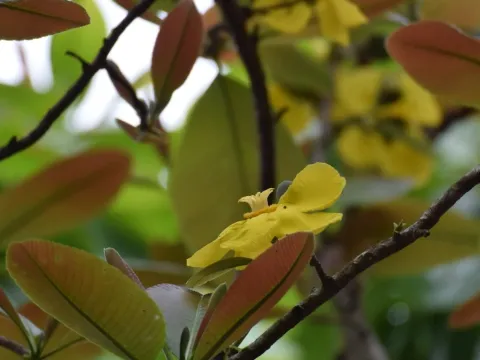
Dillenia obovata
Dillenia obovata
Dillenia obovata is a prominent tree species belonging to the Dilleniaceae family. Native to the tropical regions of Southeast Asia, this tree serves as a vital component of both the natural forest canopy and local agricultural landscapes.
What the section contains
Dillenia obovata
The species requires a tropical climate characterized by consistently high temperatures and significant annual rainfall. It is particularly well-adapted to monsoon environments where distinct wet and dry seasons influence its vegetative cycle.
Ideal soil conditions for the cultivation of this species include well-drained, deep, and nutrient-rich soils. Waterlogging should be avoided at all costs, as the root system of Dillenia obovata is sensitive to hypoxia, which can lead to fungal infections.
Botanically, the tree is characterized by its large, obovate leaves with prominent venation. These leaves contribute significantly to the photosynthetic efficiency of the tree, allowing for rapid biomass accumulation during the rainy season.
Cultivation practices involve selecting high-light locations, as the tree exhibits high phototropic requirements. Young seedlings require protection from direct harsh sun and steady moisture levels until they establish a robust root system.
The economic value of Dillenia obovata is largely tied to its timber. The wood is dense and durable, making it highly sought after for local construction, furniture making, and artisanal woodcraft in its native range.
In addition to timber, the fruits of the tree are utilized for food processing. Although tart, they are frequently used in the preparation of traditional jams, sauces, and medicinal concoctions due to their unique phytochemical composition.
Harvesting usually involves the manual collection of mature fruits. Given the tree's height, this process is often labor-intensive and requires specialized tools to ensure the integrity of the harvest and the longevity of the tree.
Post-harvest management is crucial, as the fruits have a relatively short shelf life. Processing, such as drying or extraction of juices, should be performed shortly after harvest to preserve nutritional and functional qualities.
Ongoing agronomic research focuses on the sustainable management of these trees in agroforestry systems, aiming to balance timber production with the responsible harvesting of non-timber forest products.