
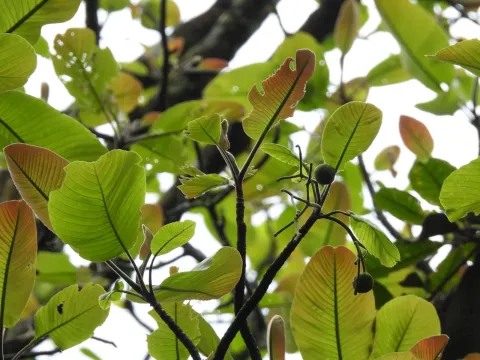
Dillenia reticulata
Dillenia reticulata
Dillenia reticulata is an evergreen tree species belonging to the Dilleniaceae family. It is native to the tropical rainforests of Southeast Asia, specifically found in countries such as Malaysia, Indonesia, and Brunei.
What the section contains
Dillenia reticulata
The plant thrives in a tropical climate characterized by consistently high temperatures and significant annual rainfall. It requires a humid environment to maintain its vigorous growth and is not frost-tolerant.
Soil requirements for this species include fertile, organic-rich substrates. Proper drainage is essential, as the roots thrive in moist conditions but can suffer if the soil becomes waterlogged for extended periods.
Botanically, the species is recognized by its large, leathery leaves with a prominent reticulated venation pattern. The flowers are large and showy, typical of the genus, featuring numerous stamens and high ornamental value.
Economically, the tree is prized for its high-quality timber, which is utilized for various construction and carpentry purposes. In addition to wood production, it serves as a valuable component in tropical reforestation projects.
The primary threat to Dillenia reticulata populations in the wild is habitat loss driven by deforestation and the conversion of land for large-scale agricultural plantations.
When cultivated in managed plantations, the trees are susceptible to various fungal diseases that thrive in high-humidity microclimates, especially if air circulation is restricted.
Pests such as stem-boring insects and foliage-feeding caterpillars can impact the health of saplings, necessitating regular monitoring during the early stages of plant development.
Agricultural management should focus on spacing the trees adequately to allow for proper airflow through the canopy, which significantly reduces the risk of moisture-related fungal infections.
Integrated pest management strategies are recommended to maintain plant health, focusing on biological controls and ensuring that the tree has adequate nutrient levels to build natural resistance.