
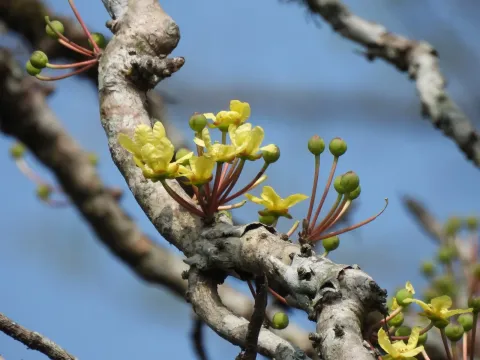
Dillenia pentagyna
Dillenia pentagyna
Dillenia pentagyna is a deciduous tree belonging to the Dilleniaceae family. It is known for its robust habit and large, alternate leaves that undergo senescence during the dry season. This biological feature allows the plant to conserve moisture in environments where water availability fluctuates significantly throughout the year.
What the section contains
Dillenia pentagyna
The origin of this species is traced to the tropical regions of South and Southeast Asia, spanning countries like India, Thailand, and Myanmar. It thrives in deciduous forests where the ecological conditions support rapid leaf turnover and the development of heavy, fleshy fruits that contribute to the local ecosystem.
Environmental requirements include a warm, humid climate with distinct wet and dry periods. For successful cultivation, the soil should be deep, well-draining, and rich in organic matter. While the tree is quite resilient once established, initial growth stages require significant sunlight and adequate soil moisture management.
Agronomic practices for this culture are centered on early nursery development. Seeds require specific pre-sowing treatments to ensure high germination rates. After transplantation, regular monitoring of the soil moisture is essential to prevent early water stress, and young trees may require protection from excessive weeds and competing vegetation.
The economic utility of the tree is diverse. The fruits are commonly consumed fresh or used in traditional culinary preparations such as chutneys and preserves. Furthermore, the bark of Dillenia pentagyna contains medicinal properties recognized in local ethnobotanical practices, often utilized for its astringent and anti-inflammatory qualities.
The primary threats to this species include infestation by specialized tropical pests that target leaves and buds during the active growth phase. Additionally, root rot remains a potential risk if trees are planted in sites with poor drainage, making them susceptible to fungal infections during the monsoon season.