
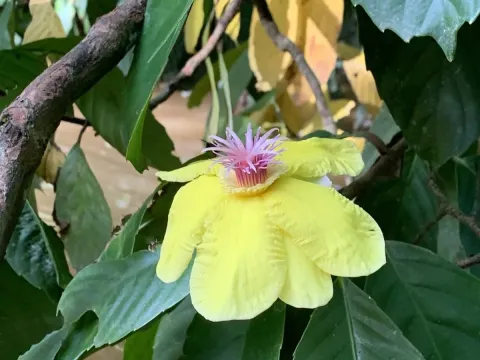
Dillenia excelsa
Dillenia excelsa
Dillenia excelsa is a large evergreen tropical tree belonging to the family Dilleniaceae. Known for its robust growth habit, this species is a prominent component of the forest canopy in its native range across Southeast Asia.
What the section contains
Dillenia excelsa
The tree thrives in humid tropical environments, specifically in regions of Indonesia, Malaysia, and the Philippines. It is naturally adapted to high rainfall areas and requires consistent humidity to maintain its vigorous growth rate throughout the year.
Successful cultivation requires deep, nutrient-rich soils that possess excellent drainage properties. While the plant appreciates moisture, waterlogged soil conditions are detrimental to root health and can lead to rapid decline of the specimen.
Climate requirements include stable, high temperatures ranging from 22°C to 30°C. The species is highly sensitive to cold, and frost exposure will cause irreversible damage, making it unsuitable for cultivation outside the tropical zone.
Economically, Dillenia excelsa is utilized primarily for its timber. The wood is valued for its durability and structural utility, often being processed for construction materials, furniture components, and specialized joinery projects.
The primary threats to Dillenia excelsa include fungal pathogens that exploit high humidity and poor soil aeration. These fungi can lead to root rot and bark lesions, significantly weakening the structural integrity of the tree.
Insect pests, particularly wood-boring beetles, pose a major risk to timber quality. These insects tunnel into the trunks of mature trees, creating galleries that compromise the wood's commercial value and overall health.
Management of nursery stocks involves rigorous phytosanitary monitoring to detect infestations early. Removing infected seedlings is a critical preventative measure to prevent the rapid spread of diseases across the plantation.
Sustainable forest management practices emphasize the importance of maintaining biological diversity to encourage natural predators of common tree pests. This ecological balance is vital for long-term health of the stands.
Proper site preparation and selecting well-draining terrain significantly reduce the incidence of disease. Ensuring adequate spacing between trees promotes better airflow, which effectively lowers the humidity trapped in the canopy.