
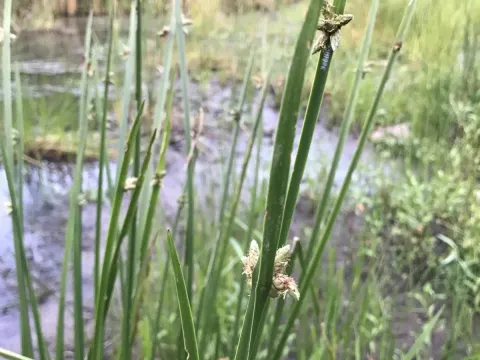
Scirpus triangulatus
Scirpus triangulatus
Scirpus triangulatus, commonly known as the triangulate bulrush, is a perennial herbaceous plant belonging to the Cyperaceae family. It is a moisture-loving species that is widely distributed across wetland ecosystems, playing a vital role in water filtration and sediment stabilization.
What the section contains
Scirpus triangulatus
For agricultural purposes, planting is best performed in early spring as temperatures rise. The ideal starting material involves healthy rootstocks, which exhibit higher vigor compared to seeds when establishing new stands in controlled aquatic environments.
The species thrives in shallow water ranging from 10 to 30 centimeters in depth. Consistent water levels are essential for successful cultivation, as prolonged exposure to dry conditions can significantly hinder growth rates and reduce overall biomass yield.
Optimal planting sites should have a silt-rich bottom that provides an abundance of nutrients. In managed agricultural settings, creating a stable, nutrient-available substrate is the foundation for a productive crop that can be harvested sustainably over multiple years.
Spacing during planting should be determined by the intended end-use of the crop. Higher density planting is recommended for erosion control and fiber production, while wider spacing allows for better individual plant development and easier maintenance access.
Scirpus triangulatus is a true hydrophyte that demands permanent water saturation. The health of the root system is directly linked to the water quality, which should ideally be well-oxygenated and free from significant industrial contaminants or chemical runoff.
The plant is highly photophilic and requires abundant sunlight to produce the robust, rigid stems characteristic of the species. Shaded conditions lead to weak stems, which are less suitable for industrial applications like weaving or construction.
Climate requirements include a sufficiently long growing season with warm temperatures. While the plant can tolerate minor thermal fluctuations, optimal biomass accumulation occurs when temperatures remain consistently above 20 degrees Celsius throughout the summer months.
Soil and sediment conditions should remain neutral or slightly acidic. The presence of excessive salts or toxic heavy metals can severely inhibit growth and negatively impact the structural integrity of the plant fibers, rendering them unsuitable for high-quality manufacturing.
Management of the water ecosystem is a core requirement. Periodic monitoring of water depth and chemical composition ensures the plant remains in an active vegetative state, minimizing the risk of developmental stunting due to environmental stress.
The yield of Scirpus triangulatus is largely determined by the fertility of the aquatic sediment and the intensity of solar radiation. When managed properly, a stable harvest of biomass can be achieved annually, making it a reliable crop for sustainable fiber production.
Productivity is measured by both the volume of harvested stalks and their quality. Strong, uniform stems are highly prized for their durability and resistance to decay, features that are essential for making mats, baskets, and eco-friendly building materials.
The timing of the harvest is critical for maximizing yield. As the plant reaches the end of its active growing phase in late summer, the fiber content in the stem matures, providing the necessary strength and texture for industrial processing.
With intensive management, yield rates can remain consistently high across multiple growing seasons. The key to high production lies in maintaining the population density, preventing the stand from becoming overcrowded or exhausted by nutrient depletion.
Strategic thinning of the stand may be required periodically to ensure that all plants have sufficient access to light and nutrients, ultimately maximizing the yield of high-quality raw materials per hectare of water area.
The primary threats to Scirpus triangulatus involve fungal pathogens that flourish in stagnant, overly humid conditions. Diseases like rust can cause discoloration and premature tissue breakdown, which significantly lowers the market value of the crop.
Various insect pests, particularly those that bore into the stem, pose a significant risk to the plant. These infestations weaken the structural integrity of the stalks and open pathways for secondary bacterial or fungal infections to enter the plant system.
Rodents such as water rats can cause substantial damage to rootstocks, often leading to patchy growth or the complete loss of sections within the plantation. Implementing physical barriers or natural pest control measures is necessary for protecting the crop.
Inconsistent water levels represent a major abiotic threat. Rapid drops in water levels can cause desiccation of the root system, while excessive flooding can overwhelm the plant, leading to hypoxia and potentially fatal root rot in sensitive stages.
- Regular monitoring of the stand for signs of insect or pathogen activity.
- Implementation of controlled water management to keep levels within optimal ranges.
- Use of biological pest control methods to maintain the crop's ecological integrity.
- Cleaning of stagnant water debris to ensure proper circulation and oxygenation.
The harvest period typically occurs in the early autumn months when the natural moisture content in the plant stems starts to decline. This timing is ideal for drying, as it reduces the risk of spoilage and mold development after the harvest is complete.
Specialized cutting tools are necessary to achieve a clean cut at the base of the stem without damaging the underlying rhizomes. Preserving the integrity of the root system is essential for ensuring robust regrowth in the subsequent growing season.
Immediately after cutting, the stems are bundled and placed in well-ventilated areas for curing. The airflow helps remove residual moisture, which is vital for preserving the natural color and long-term durability of the fibers.
Post-harvest evaluation of the site is essential. Growers should inspect the stubble and the surrounding area for any signs of pest damage or environmental stress to prepare the plan for the next cycle of cultivation.
Once cured, the raw material should be stored in cool, dry conditions away from direct sunlight and moisture. When handled correctly, the harvested stems retain their physical properties for several years, making them a highly versatile commodity.