
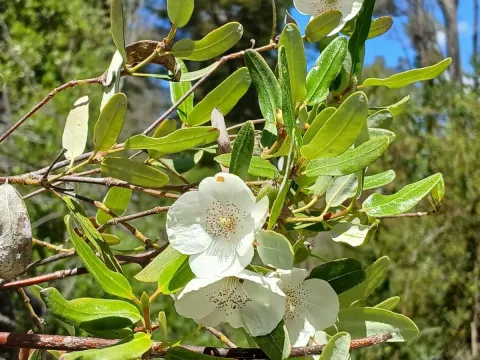
Eucryphia
Eucryphia
Eucryphia is a genus of evergreen or deciduous trees and shrubs belonging to the Cunoniaceae family. Native to the cool, temperate rainforests of the Southern Hemisphere, these plants are primarily found in Chile, Argentina, Australia, and Tasmania.
What the section contains


Eucryphia
These plants require specific environmental conditions to thrive, preferring moist, cool climates that mimic their natural habitats. They are sensitive to extreme heat and dry winds, which makes site selection critical for successful long-term cultivation.
The ideal soil for Eucryphia is fertile, well-drained, and slightly acidic to neutral in pH. They perform best when the root system remains cool, which can be achieved through deep organic mulching and ensuring the soil structure allows for adequate moisture retention without waterlogging.
Agricultural management of Eucryphia involves consistent irrigation during dry spells to ensure steady growth. Because they are often sensitive to severe frost, in colder regions, they should be planted in sheltered spots or against walls that provide protection from cold winds.
Economically, Eucryphia is highly valued in apiculture. Its late-season flowers provide nectar for honey production, resulting in a distinct, light-colored honey that is highly prized for its flavor profile and health benefits in international markets.
While generally hardy, Eucryphia can be susceptible to root rot if planted in heavy or waterlogged soils. Ensuring excellent drainage is the primary defense against such soil-borne pathogens in the plantation.
Pest issues are relatively minor but may include infestations by scale insects or spider mites, particularly in areas with low humidity. Monitoring foliage and maintaining optimal environmental conditions are usually sufficient to prevent significant pest outbreaks.