
Eucryphia hillieri
Eucryphia hillieri
Description
Growing requirements
Eucryphia hillieri is a notable hybrid within the Cunoniaceae family, resulting from a cross between Eucryphia lucida and Eucryphia moorei. This plant serves as an exceptional ornamental shrub or small tree, highly valued for its elegant, slender, and columnar growth habit.
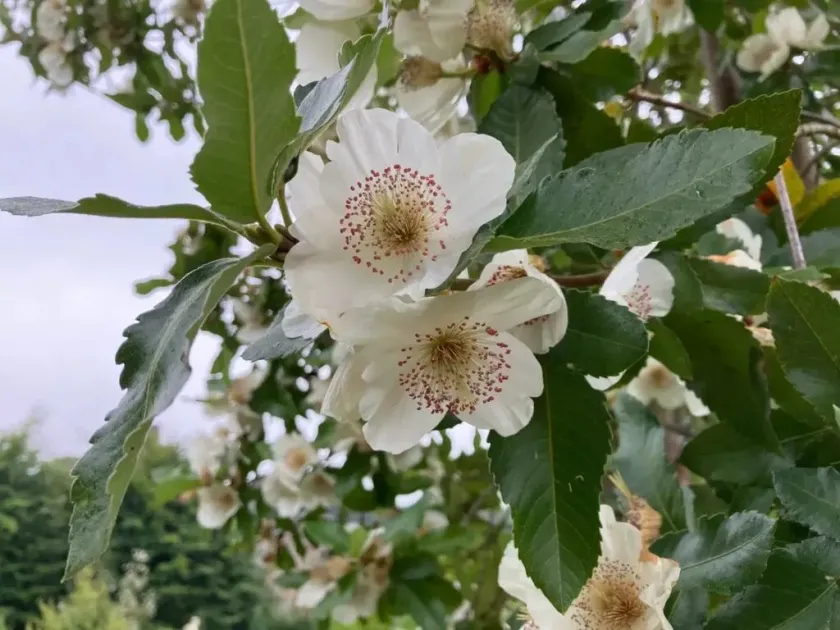
Botanically, it is an evergreen species characterized by dark, glossy leaves and an impressive display of fragrant, white, cup-shaped flowers. Blooming in late summer and early autumn, the flowers feature prominent stamens that provide a distinctive aesthetic appeal in garden landscapes.
Climate requirements for this culture are specific; it thrives in mild, oceanic climates typical of USDA zones 8 to 9. It requires protection from harsh winter winds and prefers consistent moisture, making it sensitive to extreme drought and severe, prolonged frosts which may damage foliage.
The ideal soil for Eucryphia hillieri is well-drained, acidic to neutral, and rich in humus. Waterlogging must be strictly avoided, as it leads to root suffocation; thus, incorporating organic matter and ensuring a high-quality drainage profile during site preparation is essential for plant longevity.
Regarding agrotechnical maintenance, the plant benefits greatly from shaded roots while the crown enjoys dappled sunlight. Heavy mulching around the root zone is the recommended practice to maintain soil temperature and moisture stability, which mimics the natural forest-edge habitat of the species.
Main diseases and pests
Eucryphia hillieri is generally robust against common garden pests; however, young plants may occasionally be prone to infestations of aphids or spider mites in unusually hot, dry conditions. Regular monitoring of leaf undersides is recommended to facilitate early intervention if pest populations spike.
The most significant pathological threat to this culture is root rot, particularly caused by Phytophthora species. This risk is primarily linked to poor soil drainage and excessive moisture retention in the root zone, making proper site selection and drainage management the primary defense strategies.