
Eucryphia
Eucryphia hybrids
Description
Growing requirements
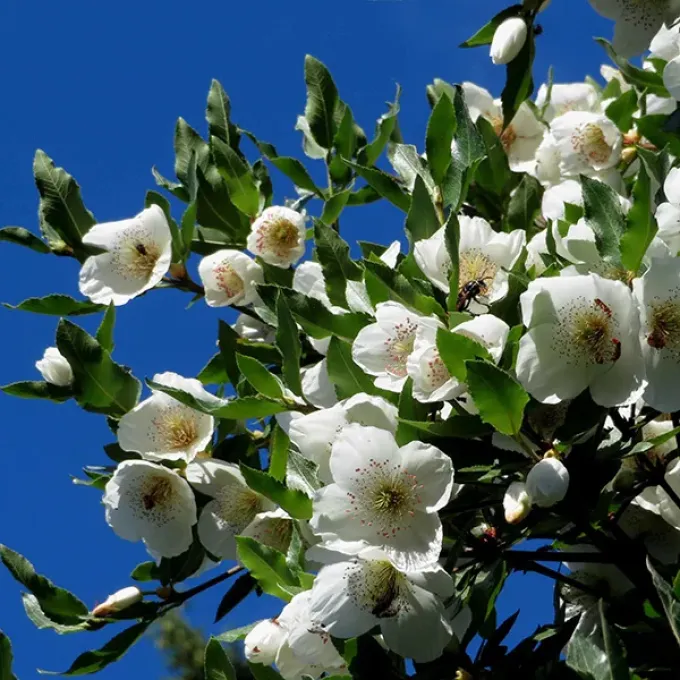
Eucryphia is a genus of evergreen or deciduous shrubs and trees belonging to the Cunoniaceae family. These plants are highly regarded in horticulture for their spectacular, bowl-shaped, fragrant flowers that typically appear in late summer and autumn.
Originating primarily from the temperate zones of the Southern Hemisphere, including Chile, Argentina, and Australia, these plants thrive in cool, moist, and temperate climates. They are particularly successful when sheltered from harsh, drying winds.
The cultivation of Eucryphia requires well-drained, deep, humus-rich soil. They are calcifuge plants, meaning they strongly dislike lime-heavy soils, which often leads to chlorosis. Maintaining consistent soil moisture is crucial for their healthy development.
Light requirements involve a position in dappled shade or semi-shade. While they can tolerate some sun, their roots must remain cool; thus, positioning the base of the plant in a shaded area is an essential practice for successful growth.
Regular maintenance includes applying a layer of organic mulch around the root zone to preserve soil moisture and regulate ground temperature. Pruning is generally minimal, focused mainly on removing damaged or crossing branches to maintain a healthy structure.
Yield
Eucryphia species and their hybrids are widely recognized as excellent honey-producing plants. In their native regions and where cultivated, they serve as a critical late-season forage source for bees, producing high-quality nectar.
Main diseases and pests
The main threats to the health of Eucryphia include root rot pathogens, especially in poorly drained soil conditions. Additionally, common garden pests such as aphids or scale insects may inhabit the foliage, requiring appropriate management and control.